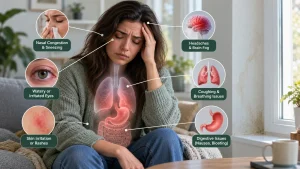
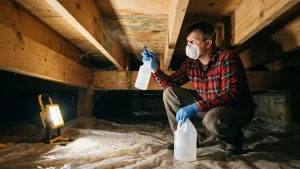
Yes, alcohol kills mold, but only under specific conditions. Alcohol breaks down mold cells on contact and works well on hard, non-porous surfaces. But does alcohol kill mold on non-porous surfaces? No, it only kills surface mold and doesn’t penetrate deeper within the materials. This causes the hyphae (root-like structures) embedded deeper in the material to survive, allowing the mold to regrow.
Alcohol treats a symptom; mold remediation identifies and corrects the underlying moisture source, kills mold instantly, tests to confirm the mold is actually gone, and documents the process so the same spot isn’t a recurring problem.
When Does Alcohol Kill Mold Completely?
On hard, non-porous surfaces such as glass, metal, or tile, 70% isopropyl alcohol works fast, breaking down the lipid membranes that hold fungal cells together and denaturing the proteins those cells need to function. But the effect only lasts while the alcohol is still wet; once it evaporates, the disinfecting action stops.
A few key points worth noting about using alcohol for mold
Why 70% works better than 99%: The water content in 70% alcohol helps it penetrate the mold cell wall so it can denature proteins throughout the cell. Stronger concentrations, like 99%, evaporate too quickly and tend to instantly harden the cell’s outer proteins, which shield the interior from being affected.
The “stay-wet” requirement: Since alcohol evaporates so quickly, you typically need to apply enough to keep the surface visibly wet for a few minutes to disinfect the spores present fully.
Where alcohol falls short: Alcohol works on hard, sealed materials but can’t reach the mold’s root structures embedded in porous surfaces like drywall, grout, or untreated wood. It also leaves nothing behind to prevent regrowth, so if the moisture issue causing the mold isn’t fixed, it will come back. Alcohol can raise the grain on wood and drive spores deeper into the material instead of removing them, the opposite of the intended effect.
Using alcohol is a simple fix to eliminate surface mold for small, non-porous spots under 10 sq ft. If the affected area is larger than that, professional mold remediation is needed to ensure the health and safety of those near mold.
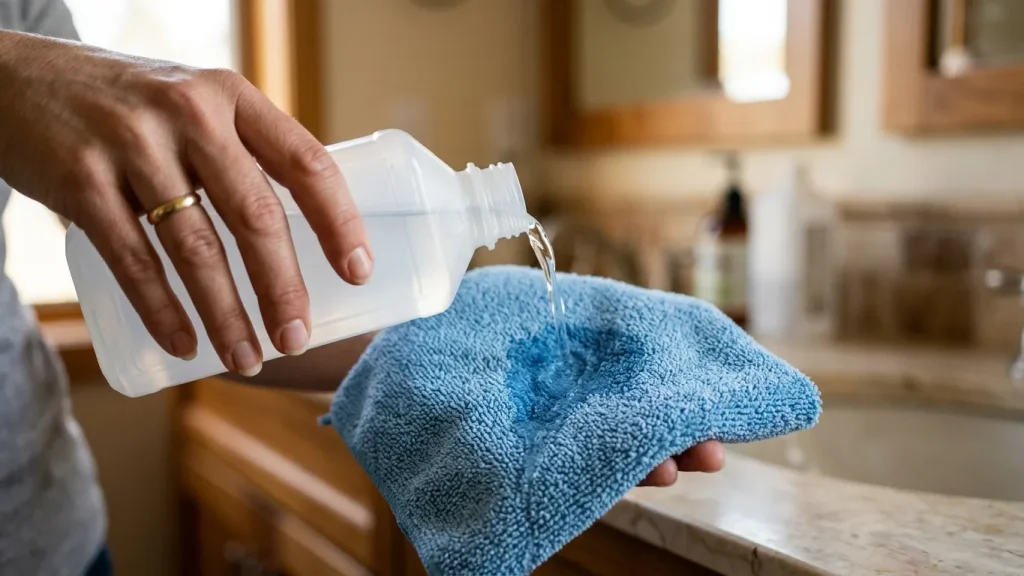
What Kills Mold: Alcohol vs. Other Household Chemicals
Now that you’ve learned isopropyl alcohol can kill certain mold on specific surfaces, here are other household agents that may help as well. It’s important to note that the killing agent’s effectiveness depends on the surface, the mold type, and the desired outcome. Here’s a direct side-by-side comparison.
| Criterion | Alcohol (70% IPA) | Bleach | Vinegar | Hydrogen Peroxide |
|---|---|---|---|---|
| Kills active mold cells | Yes | Yes | Yes | Yes |
| Kills mold spores | Partial | Partial | Partial | Partial |
| Works on porous surfaces | No | No | Partial | Partial |
| Works on non-porous surfaces | Yes | Yes | Yes | Yes |
| Removes mold staining | No | Yes | No | Partial |
| Prevents regrowth | No | No | Partial | Partial |
| Safety/fumes | Low risk | High fumes | Low risk | Moderate |
Bleach whitens the stain but can’t penetrate drywall or wood, and its fumes make it a poor choice indoors. Vinegar and hydrogen peroxide are gentler and reach a little deeper into porous material, but neither one fixes the moisture that’s actually feeding the mold. Alcohol earns its place only for a quick wipe on a small, hard cosmetic spot.
Many ask, “Can I use alcohol on black mold?”, and the answer is no. For black mold (Stachybotrys), none of these household agents will work, as this type of mold almost always lives inside porous, water-damaged material none of these products can reach.
When to Use Alcohol and When to Call a Professional
Alcohol is appropriate when:
- The affected area is under 10 square feet
- The surface is non-porous, such as glass, sealed tile, or metal
- The mold is surface-level
- The moisture source has been fixed.
Alcohol is NOT appropriate when:
- The surface is porous, such as drywall, wood, grout, or fabric
- The mold covers more than 10 square feet, under New York State’s mold regulations
- There is suspected hidden mold behind walls or under flooring
- Anyone in the home has asthma, allergies, or a respiratory condition
Learn more about DIY versus professional mold removal in our detailed guide.
Prime Aire’s own numbers back this up. Across more than 8,000 completed projects in New York and New Jersey, the company has found that identifying and fixing the source of the moisture, not just treating the mold you can see, is what gets them a first-pass clearance rate of roughly 95%.
That means most homes pass their post-remediation inspection on the very first try. Surface treatments alone, like wiping mold with alcohol, don’t come close to that success rate, since they don’t address why the mold showed up in the first place.
See what a professional mold inspection costs.
How to Remove Mold with Alcohol Safely
When the conditions line up, the right process makes rubbing alcohol as effective as possible.
- Wear gloves, eye protection, and an N95 mask, which captures about 95 percent of mold spores compared to a standard dust mask.
- Ventilate the area by opening windows and pointing a fan outward, away from occupied spaces.
- Spray 70 percent isopropyl alcohol directly onto the surface until it’s visibly wet.
- Allow a 10-minute dwell time; wiping sooner cuts the contact time that drives the kill.
- Wipe with a disposable cloth or paper towel, and never reuse it on another surface.
- Seal all used materials in a plastic bag and dispose of them immediately.
- Apply a second pass and let the surface air dry completely.
- Address the moisture source last. If you skip it, the growth returns within days no matter how well the surface was treated.
After you clean mold from surfaces, if it reappears within a week, surface treatment alone was never enough. A closer look at what mold remediation actually includes shows why and how to prevent mold regrowth.
Why Alcohol Is Never Enough After Water Damage
After a leak or flood, alcohol’s surface-level effect is beside the point. Relying on it gives homeowners a false sense of security, and that costs time they may not have.
Mold begins growing within 24 to 48 hours of water exposure, according to the EPA. By the time it’s visible, it has already reached deep into the drywall, insulation, subfloor materials, and structural wood; layers of alcohol never penetrate more than a fraction of a millimeter. That makes water damage mold a structural problem, not a product problem. Professional remediation, combined with moisture elimination, solves the problem, and materials often need to be removed and replaced rather than treated.
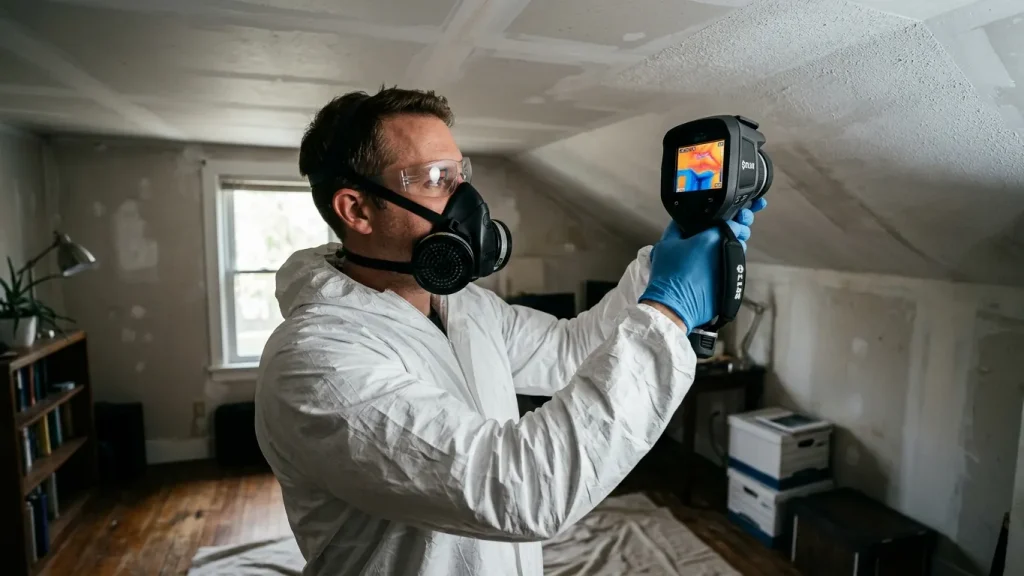
Prime Aire serves New York and New Jersey with water-damage restoration services for this type of problem. Using IICRC-certified protocols and thermal imaging, we find hidden moisture before it becomes a structural issue. Acting inside that 48-hour window is what keeps a leak from turning into a full remediation job.
Schedule Professional Mold Services Today
Alcohol (specifically 70% isopropyl) does kill mold, but only on hard, non-porous surfaces while the surface is still wet. The biggest limitation is that it can’t reach mold’s root structures (hyphae) inside porous materials, and it leaves no residual protection, so mold returns if the underlying moisture problem isn’t fixed.
Using alcohol to kill mold is a reasonable option only for small (under 10 sq ft) surface-level spots on hard materials with no remaining moisture issues, but it’s not a fix for black mold, water damage, or anything that spans a larger area or is hidden behind walls; those need professional remediation.
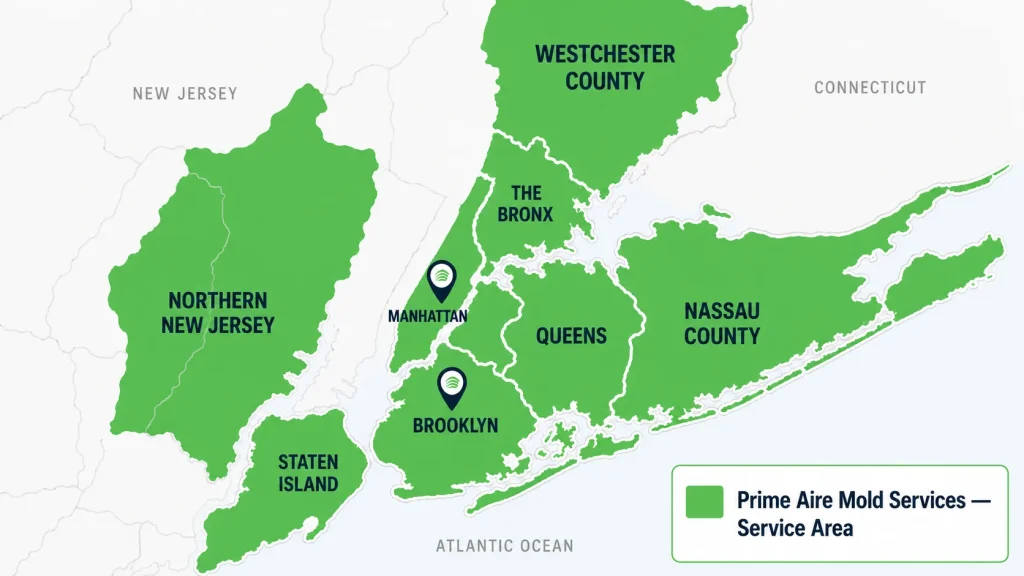
Prime Aire Mold Services has spent more than 20 years helping property owners across Manhattan, Brooklyn, Queens, the Bronx, Staten Island, Westchester, Nassau County, and Northern New Jersey get to the root of persistent mold problems. Our technicians are IICRC-certified, EPA-licensed, and include NYS-licensed home inspectors, so every inspection ends with a clear, organized report you can actually use. Call Prime Aire or schedule an inspection online, and we’ll back the visit with our 90-day warranty on the findings.
FAQs About Alcohol and Mold
Can Isopropyl Alcohol Kill Mold?
Yes, on direct contact on hard surfaces, but not inside porous materials or areas it never touches. That makes it a spot treatment, not a remediation fix.
What Concentration of Alcohol Works Best on Mold?
70 percent isopropyl alcohol outperforms higher concentrations because of its water content. The water slows evaporation, giving the alcohol more time to penetrate cell membranes and complete the kill. At 90 percent and above, it evaporates too fast for that contact time to matter.
Does Rubbing Alcohol Kill Mold on Grout or Tile?
Yes on sealed tile, no on grout. 70 percent isopropyl alcohol kills surface mold on non-porous tile, but grout is porous and only treated on the surface. Hydrogen peroxide or diluted bleach works better there.
Can Isopropyl Alcohol Kill Black Mold?
Yes, on contact and only on hard, non-porous surfaces. Black mold typically grows inside porous, water-damaged material alcohol can’t reach, so professional remediation is the safer call.
What’s the Difference Between Isopropyl and Rubbing Alcohol?
Rubbing alcohol is isopropyl alcohol diluted with water, usually to 70 percent, and that water content is what makes it effective on mold. Pure isopropyl alcohol at 90 percent or higher evaporates too fast to penetrate mold cells.