Will vinegar kill mold in a crawl space? Not on its own. It depends on how much mold has grown and how deep it sits. Acetic acid damages and kills mold cells on contact but can’t reach mold rooted inside porous wood that’s found in a crawl space.
Vinegar also won’t stop mold from returning if you don’t fix the underlying moisture, and over-spraying untreated crawl space wood can add excess moisture and cause swelling.
For infestations over 10 square feet or that have grown deep into the structure, surface spraying isn’t enough; call a professional mold remediator.
Key Takeaways
- Vinegar (undiluted, 5-8% acidity) kills mold cells on contact but can’t penetrate porous wood where mold roots, so it only works on small, surface-level patches.
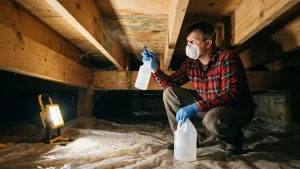
- If the mold is surface-level and covers a small area, spray the area with undiluted vinegar, let it work, then scrub with a stiff-bristled brush. Wipe the area clean and set up fans to completely dry the structure. Wear protective gear before starting, including a mask, gloves, disposable clothes, and goggles.
- If mold has penetrated deep into the structure or covers more than 10 square feet, the EPA recommends calling a professional mold remediation company.
- To prevent regrowth, stop the moisture source (leaks, poor ventilation, ground humidity) and consider a vapor barrier, dehumidifier, drainage fixes, vent sealing, and annual inspections.
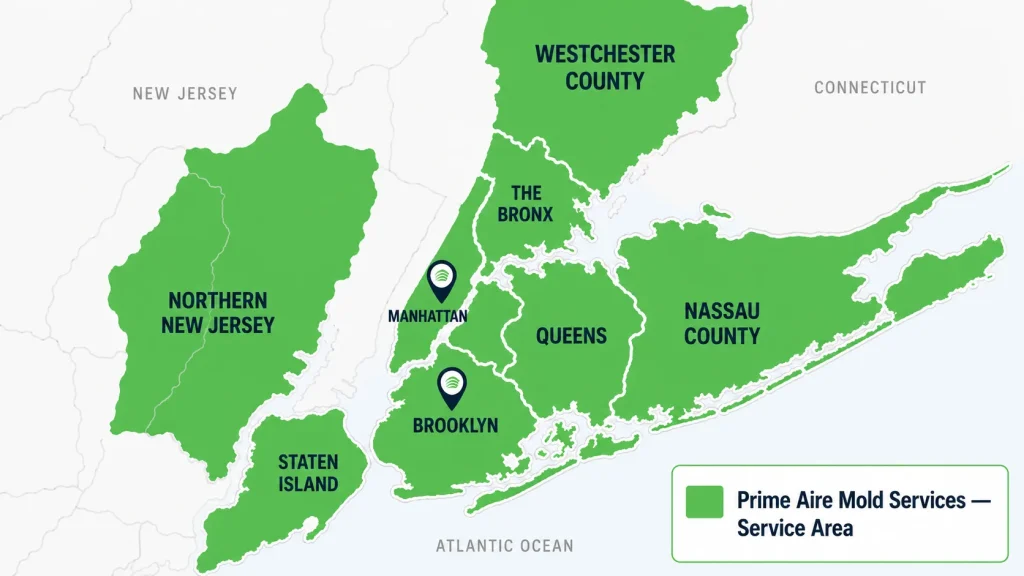
- Prime Aire offers certified mold remediation services and has completed over 8,000 mold services across NYC’s five boroughs, Westchester County, Nassau County, and Northern New Jersey. Call (877) 307-5166 if you need help removing mold.
Will Vinegar Kill Mold in Crawl Spaces? The Truth
Vinegar’s acetic acid breaks down mold cell structure on contact, but two limits matter: concentration and depth. Undiluted white vinegar (5-8% acidity) has enough acid to work, while weaker dilutions perform poorly. Diluting it 50/50, as many guides suggest, drops it below effective strength.
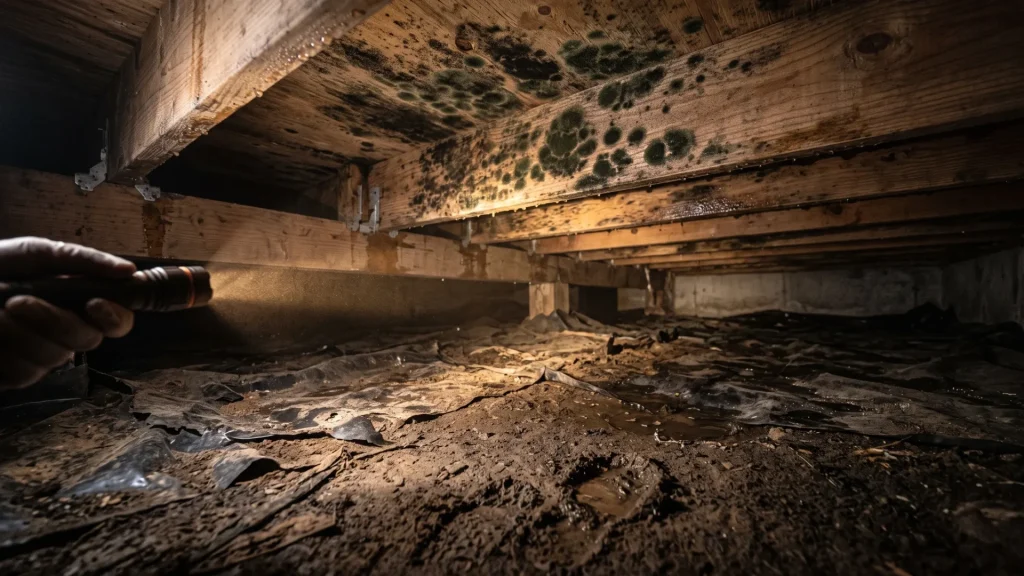
Depth is the bigger problem: wood is porous, so mold roots below the surface where spray can’t reach; vinegar clears the face of a joist but not what’s grown into the grain, so treated spots often return.
Vinegar, alcohol, bleach, hydrogen peroxide, borate products, and other household items usually fail to kill mold completely because they treat only the surface.
What Causes Mold to Grow in Crawl Spaces?
Everything mold needs to thrive is already sitting under your floor:
- The joists and subfloor provide organic material
- The enclosed space traps dead air
- Moisture comes from every direction
- Ground moisture evaporates upward whenever a vapor barrier is missing or torn
- Plumbing leaks run unnoticed for months below the floor
- Vented crawl spaces pull humid summer air inside, where it condenses on cooler surfaces
- Poor drainage around the foundation pushes water toward the space instead of away from it
This is why surface treatment alone never holds. You can wipe growth off a joist, but if ground moisture keeps evaporating into the space, the colony comes right back.
How to Remove Crawl Space Mold With Vinegar
If mold has infested a small area and only on the surface, here’s what you can do:
- Gear up first. A confined crawl space concentrates spores the moment you disturb them, so protective gear is not optional. An N95 respirator or a higher-rated mask, gloves, goggles, and disposable coveralls are essential.
- Ventilate. Open any vents and set a fan at the entrance to push air out before you go in.
- Inspect the growth. Use a flashlight to see whether the mold wipes off cleanly or sits embedded in the grain, telling you whether it is surface-level or deeper. If it’s surface-level, continue to the next step; if it’s in the grain, call a professional mold remover.
- Fill a spray bottle with undiluted white vinegar. Do not add water, since dilution drops the acidity below a useful level. Do not add bleach, or you will create a harmful, toxic chlorine gas.
- Saturate and wait. Cover the surrounding area with plastic sheeting during work. Spray the patch and leave it for at least an hour so the acid can break down the mold. Be careful not to overspray here.
- Scrub. Once the vinegar has had time to work, scrub the surface with a stiff-bristled brush.
- Wipe clean. Remove residue with a damp cloth.
- Dry completely. Run fans or a dehumidifier until the area is fully dry, since leftover moisture invites regrowth.
On floor joists, check the wood after it dries, because if staining stays in the grain, the mold has rooted deeper than any spray reaches, and that joist needs professional removal.
How to Stop Crawl Space Mold From Coming Back
Mold growth will continue if the moisture that feeds it stays, so prevention comes down to controlling the water source:
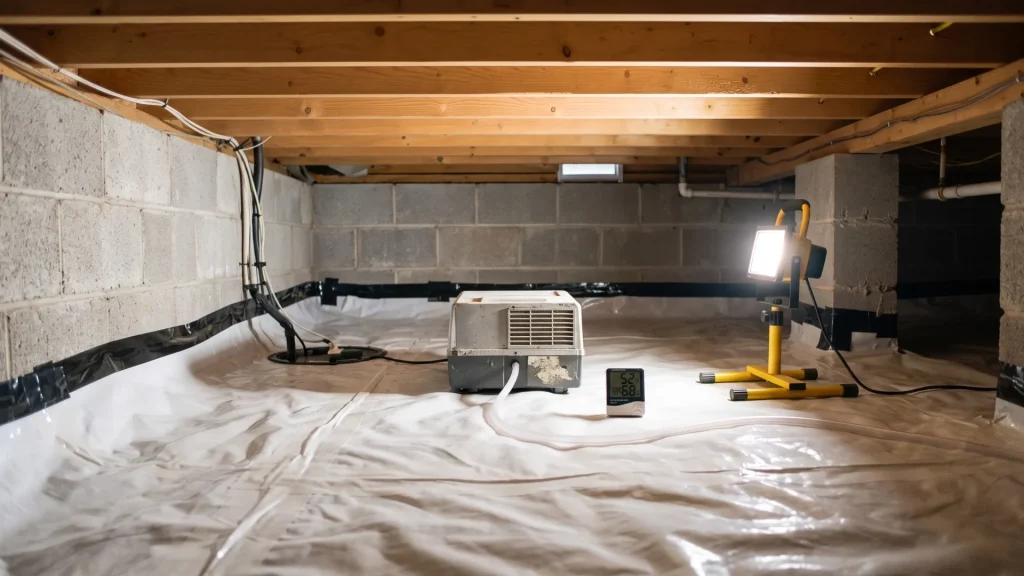
- Vapor barrier: 6- to 20-mil polyethylene sheet across the floor to block rising ground moisture
- Dehumidifier: keep humidity below 60 percent to prevent mold from establishing
- Drainage: correct any issues directing water toward the crawl space
- Vent sealing: close vents during humid weather
- Annual inspection: catch new moisture entry points early
Encapsulation is the strongest long-term defense, but it does not kill mold on its own. Sealing over active growth just traps the problem, which is why mold remediation has to come first, followed by drying and then sealing.
When to Call Professional Mold Services
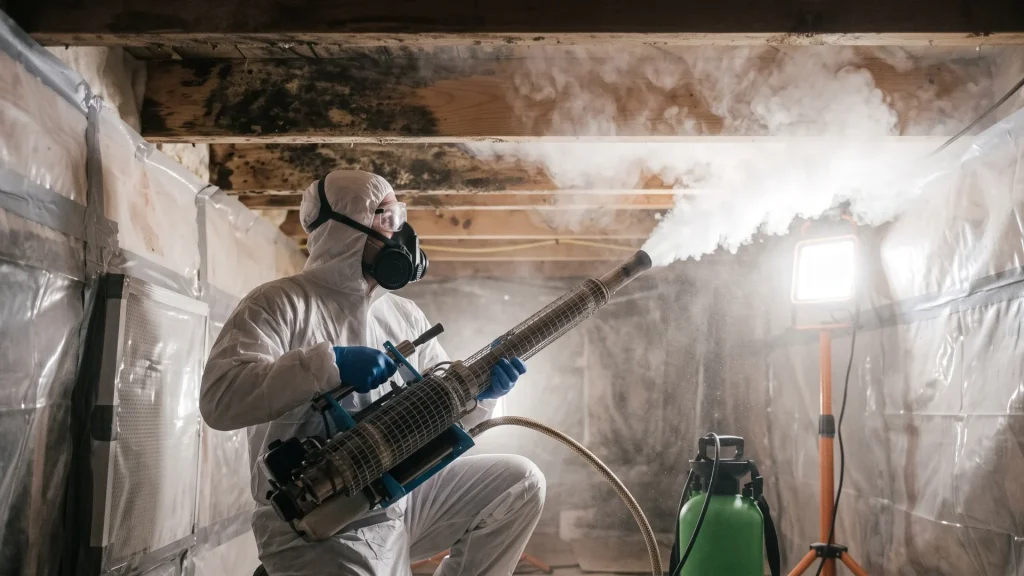
Call a professional if the mold covers more than 10 square feet, per EPA guidelines, or if it has rooted into floor joists, support beams, or subflooring. Wet, sagging, or visibly colonized insulation is another sign it’s past DIY territory, as is mold that keeps coming back after cleaning; a sign the moisture source is still active.
Unexplained respiratory symptoms or worsening allergies in you or your family are also reasons to bring in help, as is a crawl space too tight, hazardous, or hard to reach safely.
Professionals start with a comprehensive inspection to track down hidden moisture sources and assess the full extent of the damage. From there, they seal off the work area and physically remove mold using HEPA vacuums, soda blasting, or dry ice blasting. The job isn’t done once the mold is gone, either; long-term prevention means fixing drainage issues, installing heavy-duty vapor barriers, or setting up crawl space encapsulation.
Prime Aire Mold Services has completed 8,000+ jobs across all five boroughs, Westchester County, Nassau County, and Northern New Jersey. We’ve seen firsthand how the DIY vinegar method rarely works effectively on mold.
Don’t waste your time or money; contact a professional who will do the job right the first time.