TL;DR
Is Chaetomium mold dangerous? Yes, mainly for people with asthma, mold allergies, chronic lung disease, or a weakened immune system. Chaetomium is common in water-damaged buildings, can trigger allergy and asthma symptoms, and some species produce mycotoxins. Serious infections are rare and mostly affect people with weakened immune systems.
Across 8,000+ projects in New York and New Jersey, Prime Aire Mold Services has found X cases of Chaetomium mold.
Key Takeaways
- Chaetomium mainly risks people with asthma, mold allergies, chronic lung disease, or a weakened immune system. Serious infections from it are rare.
- It only grows on materials that stay wet, like drywall, wood, and ceiling tiles. Finding it means the building has had a water problem for a while.
- Some species produce mycotoxins, including chaetoglobosins and sterigmatocystin. Their effects on people at indoor levels still haven’t been well studied.
- Air samples can miss Chaetomium because its spores stay clumped in the colony until it’s disturbed. Moisture readings, thermal imaging, and surface samples fill that gap.
- The EPA says most patches under about 10 square feet can be cleaned yourself. In New York State, any hired mold job over 10 square feet needs licensed professionals, and the same licensee can’t do both the assessment and the remediation on one property.
What Is Chaetomium Mold?
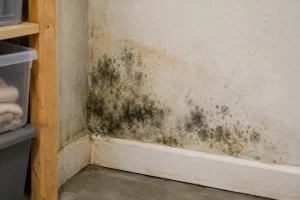
Chaetomium is a genus of roughly 80 to 100 fungal species, and Chaetomium globosum is the one found most often indoors. It feeds on cellulose, so it grows on wet drywall paper, wood, wallpaper, and ceiling tiles. Colonies start white and cottony, then turn grayish olive, brown, or nearly black, which is why people mistake it for Stachybotrys chartarum, the mold usually called “toxic black mold.”
Chaetomium belongs to a group of high-moisture molds, along with Stachybotrys and Fusarium, that only grow on materials that stay wet. Finding one means water has been sitting in the building for a while. Its main mycotoxins are chaetoglobosins, and some species also make chaetomin and sterigmatocystin, a potent carcinogen.
Is Chaetomium Mold Dangerous? Health Effects Explained
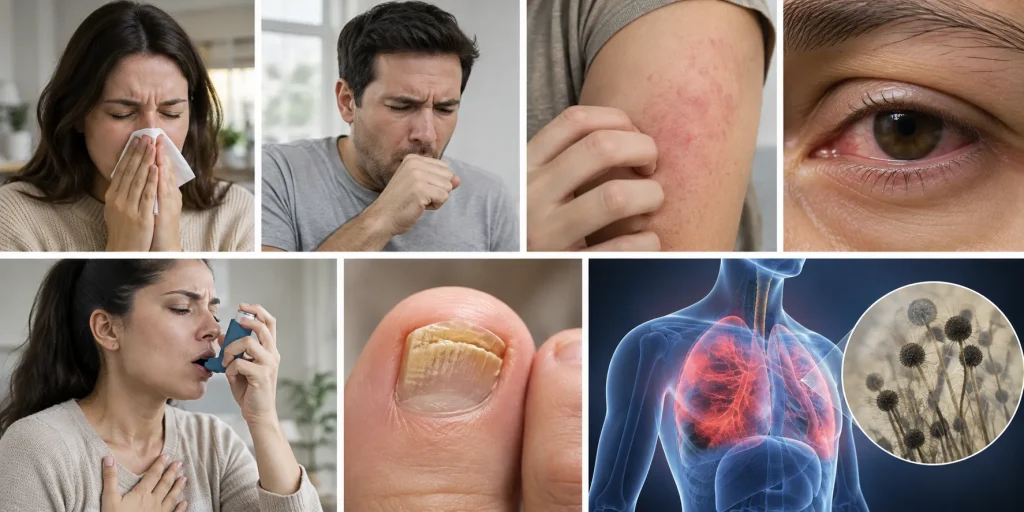
Chaetomium mold health effects depend on how long you’re exposed, how much mold is growing, and your immune health. Chaetomium is a known allergen: INSPQ says that in one study of atopic patients, 7% tested positive for C. globosum. These Chaetomium mold exposure symptoms look like seasonal allergies, so they’re easy to dismiss.
Chaetomium mold’s main health risks include:
- Allergy and breathing problems: Breathing in Chaetomium spores can cause a sore throat, coughing or wheezing, itchy or burning eyes, sneezing, a stuffy nose, and skin rash. It can also worsen asthma and other breathing conditions.
- Mycotoxins: Chaetomium produces mycotoxins such as chaetoglobosins, which harm cells in lab studies. Researchers have not yet shown what these toxins do to people at indoor levels.
- Infections: Chaetomium rarely causes infections. When it does, they are usually skin or nail infections, sometimes after a cut or injury. Serious invasive infections are even rarer but can cause pneumonia and fatal brain infections, mostly in people with blood cancers, transplants, or a history of injected drug use. Risk also differs by strain.
Where Chaetomium Grows and How to Find It in Your Home
Knowing how to find mold in a house starts with finding the water source. Most Chaetomium species grow best between 25 and 35°C (77 to 95°F) on materials that stay wet, such as drywall behind leaking bathroom and kitchen walls, flooded basements, and stained ceiling tiles. The EPA recommends keeping indoor humidity below 60%, ideally 30 to 50%, and drying wet materials within 24 to 48 hours.
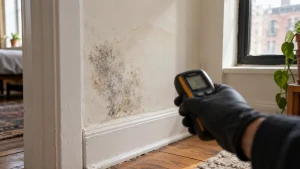
Air tests can miss Chaetomium. Its spores stick together and stay in the colony until it dries out or gets disturbed, so air samples taken before remediation can show low counts. A thorough mold inspection with Prime Aire Mold Services combines moisture readings, thermal imaging, surface samples, and air samples.
How to Get Rid of Chaetomium Mold and How to Recover
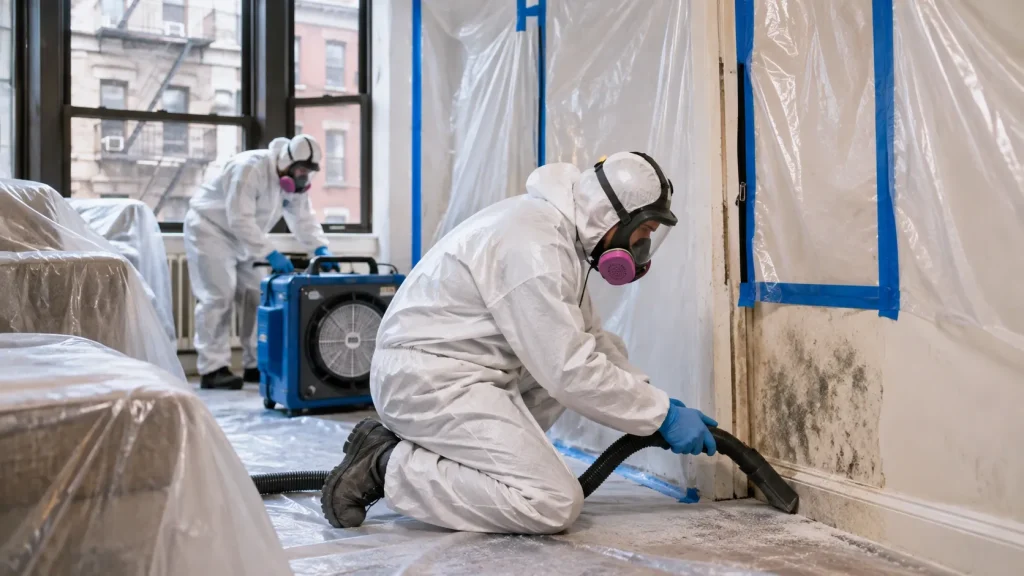
How do you get rid of Chaetomium? Fix the water problem first, then remove the growth without spreading it. Tearing out moldy drywall yourself disturbs the colony and releases spores. The EPA says most people can clean a patch under about 10 square feet; larger areas or heavy water damage call for professional mold remediation.
In New York State, a hired mold job over 10 square feet requires a licensed mold professional, and the same licensee can’t do both the assessment and the remediation on one property.
Prime Aire’s professional remediation follows a set sequence:
- Find and repair the moisture source.
- Seal off the work area.
- Run HEPA air filtration.
- Remove wet porous materials, such as drywall, and clean what remains.
- A licensed mold assessor runs clearance testing.
Across the projects Prime Aire clears, 95% pass on the first clearance test.
How Can I Recover From Mold Toxicity?
End the exposure first, then see a doctor about symptoms that don’t go away. Chaetomium nail infections, for example, have been treated with the antifungal itraconazole. If your immune system is weakened, get medical advice early. These warning signs of mold toxicity can help you decide when to call.
Schedule a Professional Mold Inspection Today
If you’ve had water damage, notice a lasting musty smell, or have allergy symptoms you can’t explain, a lab-confirmed test shows what’s growing and where.
Prime Aire Mold Services has 20+ years of experience, IICRC-certified technicians, and NYS-licensed home inspectors. We use thermal imaging cameras, laser particle counters, and fiber optic borescopes to trace moisture behind walls. A residential mold inspection and testing visit costs $389, includes thermal imaging, and your report arrives within 2 to 3 business days, backed by a 90-day satisfaction warranty.
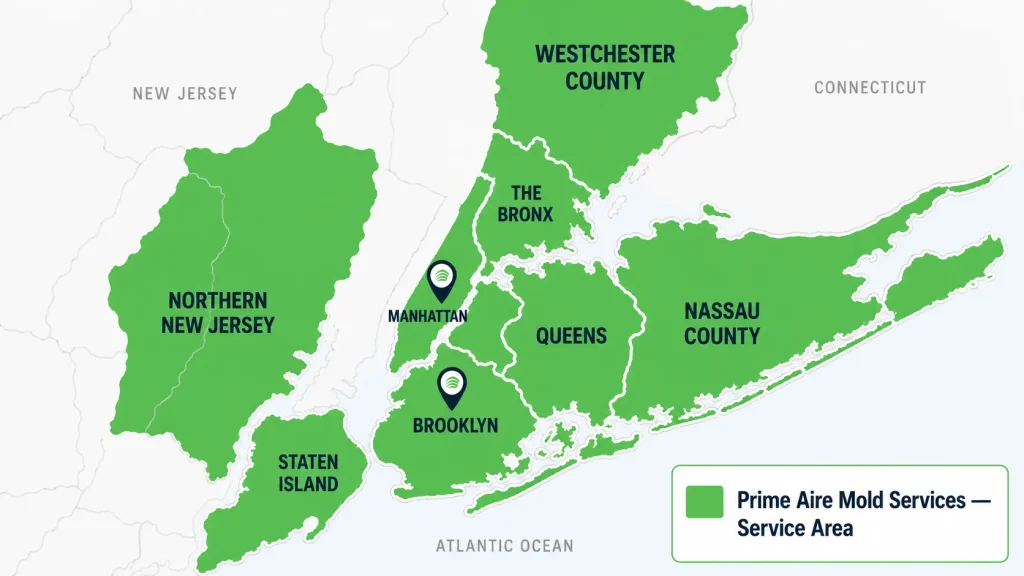
We serve all five boroughs (Manhattan, Brooklyn, Queens, the Bronx, and Staten Island), plus Westchester County, Nassau County, and North New Jersey. Worried about mold in your home? Schedule testing before things get worse.
FAQs
Is Chaetomium a Toxic Mold?
Some Chaetomium species produce mycotoxins, mainly chaetoglobosins. Researchers haven’t established what these toxins do to people at indoor levels.
What Are the Symptoms of Exposure to Chaetomium?
Common symptoms are a stuffy nose, sore throat, coughing, wheezing, burning eyes, and skin rash. People with asthma or mold allergies can react more severely. Rarely, it causes nail, skin, or lung infections, mostly in people with weakened immune systems.
How to Get Rid of Chaetomium?
Fix the moisture source first, then remove the moldy materials. In New York State, a hired job over 10 square feet needs a licensed mold assessor and a separate licensed remediation contractor.
Can Chaetomium Be Carcinogenic?
Some species produce sterigmatocystin, which INSPQ calls a potent carcinogen. Whether indoor exposure to it causes cancer in people hasn’t been studied.