
The 10 warning signs of mold toxicity fall into three groups: respiratory symptoms (congestion, coughing, wheezing), irritant reactions (itchy eyes, skin rashes, sore throat), and whole-body symptoms (fatigue, headaches, brain fog, and occasional digestive upset), all of which the CDC and EPA link to exposure to damp, moldy indoor environments.
In a city like New York, where older housing stock, basement apartments, and humid summers make water intrusion common, these signs show up often, and they’re easy to mistake for a cold or seasonal allergies.
Prime Aire breaks down each sign, what’s happening in your body, and when it’s time to hire professional mold testing services.
Key Takeaways
- The 10 signs sort into three groups: respiratory (congestion, coughing, wheezing), irritant (itchy eyes, skin rashes, sore throat), and whole-body (fatigue, headaches, brain fog, occasional digestive upset).
- “Mold toxicity” isn’t a formal diagnosis. The CDC and EPA describe allergic reactions, irritant effects, and, far less commonly, mycotoxin reactions in heavy, prolonged occupational exposure. Most of what people call “mold toxicity” is a real, documented reaction; it’s just not “toxic” in the way the term implies.
- Symptoms like mood changes, joint pain, weight changes, and food sensitivities are widely reported but less established
- Location and timing tell mold apart from a cold or allergies. Symptoms that persist for weeks, show up mainly in one room, and ease when you’re away from the building point to mold rather than a seasonal or viral cause.
- NYC’s housing stock raises the odds: prewar plumbing, below-grade apartments, shared HVAC systems, and humid summers all push indoor conditions past the 50% relative humidity ceiling CDC and EPA recommend staying under.
- Testing isn’t always necessary. If you can see mold, the CDC says you need to remove it regardless of what a test shows.
- Two separate next steps: persistent or severe symptoms are a question for a doctor; a musty smell, visible growth, or recurring dampness is a job for a mold inspector and remediator.
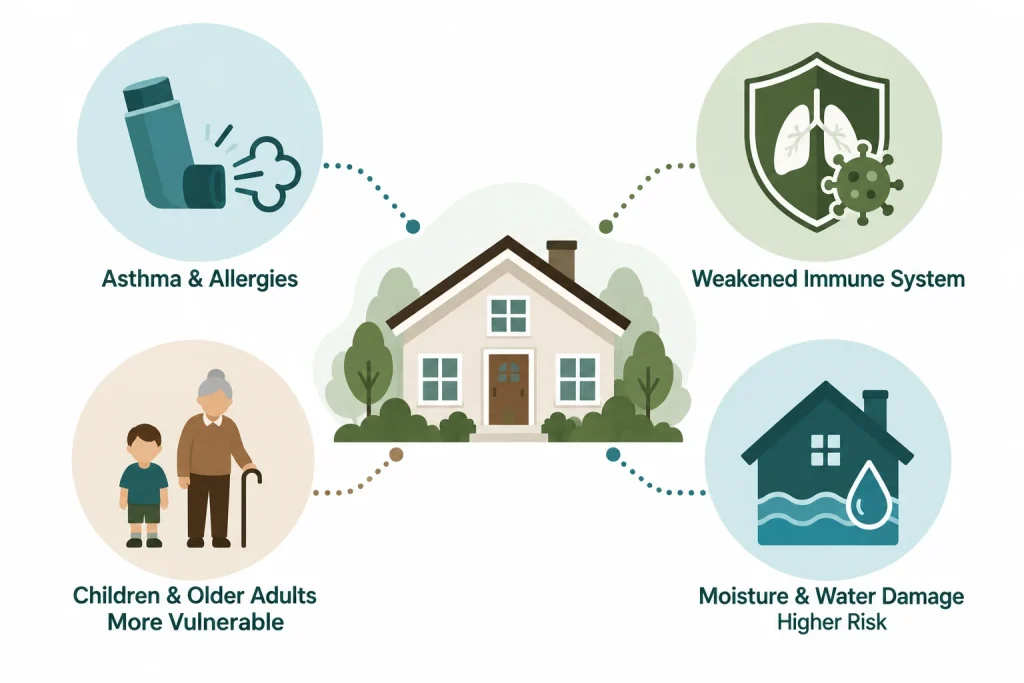
- Highest-risk groups: people with asthma or mold allergies, young children, older adults, and anyone immunocompromised or with chronic lung disease.
What Does “Mold Toxicity” Actually Mean?

“Mold toxicity” is the term most people search for, but it isn’t a formal medical diagnosis. The CDC and EPA describe mold’s effects in three categories: allergic reactions, irritant effects, and, far less commonly, reactions to mycotoxins in people with heavy, prolonged exposure, such as farm workers handling moldy hay.
Indoor mold exposure can cause upper respiratory symptoms, cough, and wheeze in otherwise healthy people; worsen asthma in people who already have it; and cause hypersensitivity pneumonitis in susceptible individuals.
Most of what people call “mold toxicity symptoms” are real, documented reactions to mold exposure; they’re just not caused by “toxins” in the way the term implies for most people. That distinction matters because it points you toward the right next step: get the mold out of your home, and if symptoms persist, see a doctor to rule out other causes.
The 10 Warning Signs of Mold Toxicity
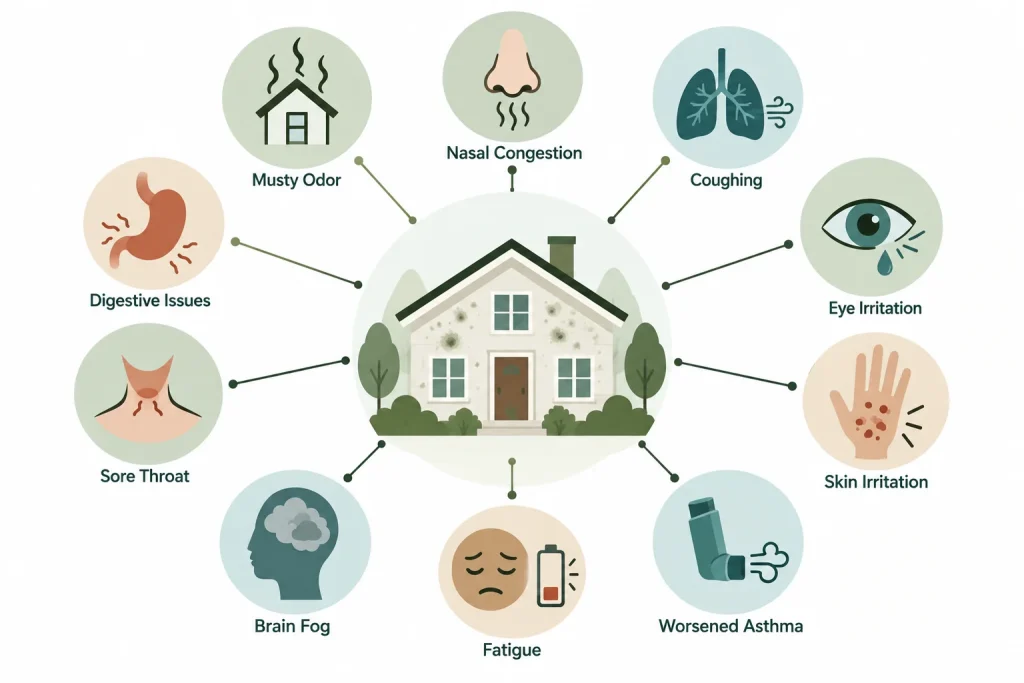
1. Persistent nasal congestion or sinus pressure
A stuffy nose or sinus pressure that doesn’t clear up, especially if it improves when you’re away from the building, is one of the most common allergic responses to mold spores.
2. Coughing, wheezing, or breathing difficulty
Mold exposure can irritate the airway directly and worsen asthma in people who have it. The EPA specifically notes that people with asthma should avoid mold exposure altogether.
3. Burning, itchy, or watery eyes
Eye irritation is one of the classic hay-fever-type reactions the EPA lists for mold exposure, along with sneezing and a runny nose.
4. Skin rashes or irritation
Direct contact with mold or mold spores can cause dermatitis-type skin reactions in sensitive individuals.
5. Worsening asthma or allergy symptoms
If you already have asthma or a mold allergy, mold exposure is a documented trigger for flare-ups and attacks.
6. Unusual fatigue that doesn’t improve with rest
Fatigue is one of the most commonly reported nonspecific symptoms tied to time spent in damp buildings, though it’s harder to pin to mold alone than the respiratory signs above.
7. Headaches or trouble concentrating
Often described as “brain fog” or memory problems, this is another frequently reported but nonspecific symptom in damp indoor environments. It’s worth tracking whether it improves when you’re away from the space.
8. Sore throat or throat irritation
Ongoing throat irritation, especially in a musty-smelling room, follows the same irritant pathway as the eye and skin reactions above.
9. Digestive upset
Less common, but some people report nausea or stomach discomfort tied to mold exposure. If this is your only symptom, it’s worth ruling out other causes first.
10. A musty smell or visible growth, even without symptoms
This sign ties everything together. A persistent musty odor, water stains, or visible spotting means there’s an active moisture problem, whether or not anyone in the home is symptomatic yet.
Other Symptoms Some People Report
- Shortness of breath/fever: CDC notes these as more severe reactions, mainly in occupational settings with heavy exposure (e.g., farm workers around moldy hay), not typical home exposure
- Nosebleeds and body aches
- Mood changes, anxiety, depression, irritability
- Dizziness or ringing in the ears
- Unexplained weight gain or loss
- Joint or muscle pain (“bone pain”)
- Temperature dysregulation; night sweats or feeling cold
- Increased thirst or urination
- Insomnia or disrupted sleep
- Food sensitivities (nuts, dried fruit, coffee, foods that can themselves carry mold)
- Sensitivity to light or noise (Green Home Solutions’ list)
Who’s Most at Risk
Per the CDC and EPA, exposure affects people differently. You’re more likely to have a noticeable reaction if you:
- Have asthma or are allergic to mold
- Are immunocompromised or have chronic lung disease
- Are a child or an older adult
- Spend a lot of time in a home or building with a known leak, flood history, or chronic damp basement
How to Tell This Apart From a Cold or Seasonal Allergies
The biggest tell is location and timing. Cold symptoms resolve in a week or two, no matter where you are. Seasonal allergies track with outdoor pollen counts. Mold-related symptoms tend to persist for weeks, show up mainly indoors or in one specific room, and ease up when you leave the building for a few days.
Why This Shows Up So Often in NYC Homes
New York’s housing stock adds a few specific risk factors:
- Prewar buildings with older plumbing
- English basements and garden apartments below grade
- Shared HVAC and laundry systems in multi-unit buildings
- Humid summers that push indoor relative humidity well past the 50% ceiling the CDC and EPA both recommend staying under
- Storm-related flooding and slow pipe leaks in older buildings; two of the most common sources we see across the greater NYC area.
Of our 40 NYC-area inspections in July, 20% were called in after residents noticed floor buckling rather than visible mold.
What to Do If You Recognize These Mold Toxicity Signs
For your health: If symptoms are persistent, severe, or affecting your daily life, see a doctor. They can evaluate you for a mold allergy, asthma, or another condition using standard testing.
For your home: Fixing the moisture source is the only way to stop mold from coming back; cleaning it up without addressing the water problem just resets the clock, per the CDC and EPA. That starts with a professional inspection to find the moisture source, confirm what’s growing and where, and scope a remediation plan if needed.
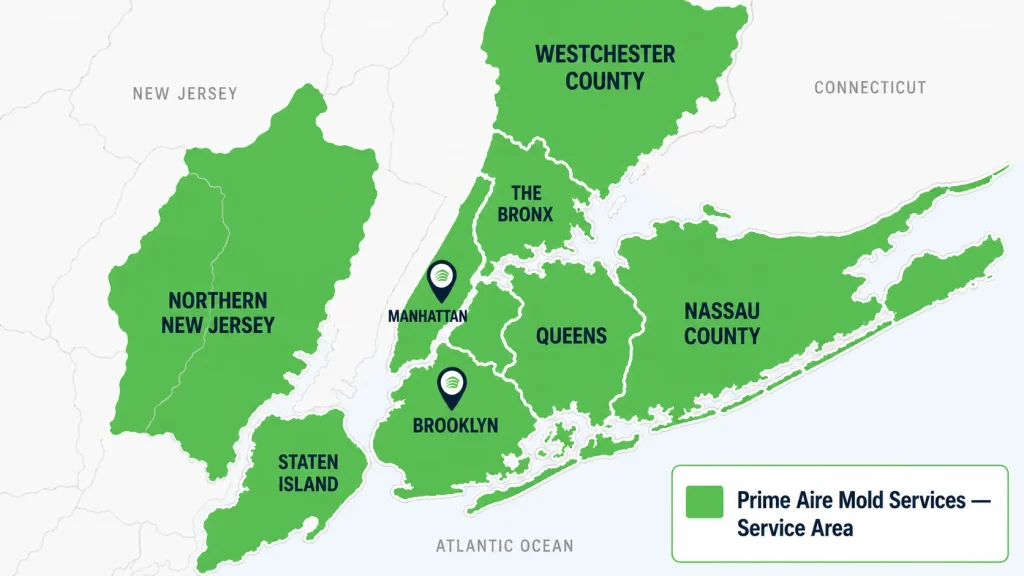
If you’re in the NYC metro area, Prime Aire Mold Services offers residential and commercial mold inspections with thermal imaging included at no charge, IICRC-certified technicians, and NYS-licensed home inspectors on staff.
Call (877) 307-5166 or contact Prime Aire to schedule mold inspection and testing today.
FAQ
Here are frequently asked questions about mold toxicity.
Is Mold Testing Necessary to Know If I Have a Problem?
Not always. The CDC doesn’t recommend mold testing to decide whether a home has a problem if you can already see it. You should remove it regardless of what a test shows; however, a mold test can tell you exactly what was found and what type of remediation is needed.
How Long Do Symptoms Last After Mold Exposure Stops?
This varies by person and by symptom. Irritant and allergic reactions often ease once the mold is removed and the moisture source is fixed, but we can’t promise an exact timeline; if symptoms persist, ask your doctor.
Can Mold Exposure Cause Long-Term Health Problems?
For most people, symptoms resolve once exposure stops. People with asthma, mold allergies, or compromised immune systems are more likely to have a more serious reaction and should talk to a doctor about ongoing risk.
Who Is Most at Risk From Mold Exposure?
People with asthma or existing mold allergies, young children, older adults, and anyone who is immunocompromised or has chronic lung disease.