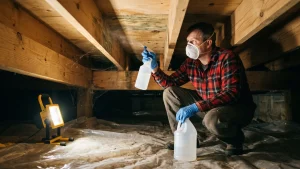
Short answer: Mold testing in NYC has to come from a New York State licensed mold assessor on any project over 10 square feet, and a Prime Aire Mold Services residential inspection costs $389 to $429 before tax. Hire the assessor who finds the moisture source and samples only where a result changes the plan.
Three swab samples from one 20 square foot patch of mold you can already see tell you the same thing three times. Quotes like that have multiplied since mold testing became a boom business in New York City and pulled in a wave of new inspectors.
Most of them mean well, and any of them can run an air test. Far fewer can tell you where the water is coming from and what has to come out to stop it, which is the part you are paying for.
The law decides who is allowed to test your home. Experience decides who is worth hiring.
If you are not sure you need testing at all, call (877) 307-5166 and ask. We will tell you if you do not.
Who does mold testing in NYC under New York State law
Article 32 of the New York State Labor Law has licensed mold work since 2016. The Department of Labor’s fact sheet on hiring a mold assessor or remediation contractor draws the line at 10 square feet: any project with more mold than that needs a licensed assessor first and a licensed remediation contractor second.
The same fact sheet puts finding the underlying moisture source among the assessor’s duties. As of October 2026, the department’s mold program page also links a Licensed Mold Contractors Search Tool, so ask for the license number on the first call and check it.
Prime Aire Mold Services holds both licenses and uses each on separate projects, taking one role per New York project. If we test your apartment, another licensed company removes the mold. If we remediate, an independent assessor tests and clears the work. Article 32 requires that split, and the conflict of interest it prevents is the reason the law exists.
| Who | What New York lets them do | What you get from them |
|---|---|---|
| Licensed mold assessor | Inspects, finds the moisture source, writes the remediation plan and clears the finished work | A Mold Remediation Plan, then a passed clearance report |
| Licensed mold remediation contractor | Removes the mold the plan describes, never on a project it assessed | A Mold Remediation Work Plan before work starts and a posted license notice |
| Home inspector | Reports on a house before a sale, and needs a Mold Assessor license too if the report assesses mold | A pre-purchase report, plus a mold assessment only if the inspector holds the assessor license |

Finding the water is the part new inspectors miss
Mold is the symptom. The inspection exists to find what keeps the material wet, and in New York City that answer often sits inside a building system a new inspector has not learned to read.
Anybody can take mold samples. Finding the moisture source is what fixes your problem.
Yury Gershman, Prime Aire Mold Services
When nobody finds the source, a contractor replaces the moldy drywall with new drywall in the same damp conditions, and the mold comes back.
| What you notice | Likely source | How an inspector confirms it |
|---|---|---|
| Musty air and damp upper walls, no leak anywhere | A building envelope (exterior walls, roof, windows) that traps humidity instead of venting it | Hygrometer readings by room, thermal imaging of exterior walls |
| Damp at the base of basement walls, worse after rain | Groundwater or poor outside grading | Moisture mapping up from the slab, then drainage outside |
| A stain that follows a foundation crack | A foundation defect letting water through | Moisture meter readings along the crack, a borescope camera if the wall is finished |
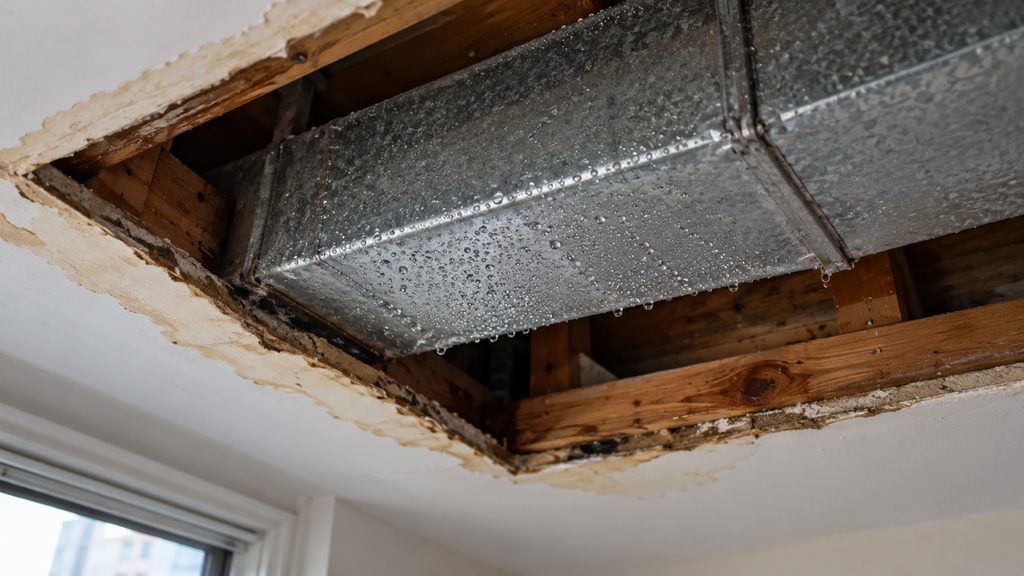
| Growth at supply vents or a wet ceiling near ducts | HVAC equipment making condensation and humidity | Humidity at supply and return, then the ducts, coil and drain |
Most of these start out of sight, which is why finding hidden mold takes instruments and a trained eye.
What mold testing in NYC should cost, and where padding hides
A residential inspection from Prime Aire Mold Services costs $389 to $429, depending on distance and travel time. Our mold inspection and testing visit includes moisture mapping, thermal imaging when it helps, the first sample, an outdoor control when appropriate, and a written report with a remediation outline. Each additional sample costs $95. Tax may apply, and separate reports, difficult access, multiple visits, large commercial properties and after-hours appointments add fees.
That makes the sample count the number to watch. I have seen inspectors take three swabs from a single 20 square foot area and run several air tests in a small apartment. Neither adds information. An experienced inspector samples only where a result would change what gets removed.
According to the EPA’s guidance on when mold sampling is needed, sampling is unnecessary in most cases where growth is visible, and no federal limits exist for mold or spores. It also says sampling belongs with professionals experienced in interpreting results.
| Situation | Samples | Total before tax |
|---|---|---|
| Visible growth on one bathroom wall, known leak | None beyond photos and moisture readings | $389 to $429 |
| Musty smell in a one-bedroom, nothing visible | One indoor air sample plus an outdoor control | $389 to $429 |
| Two rooms to compare, hidden wall problem suspected | Two indoor air samples plus an outdoor control | $484 to $524 |
| The bathroom wall job, padded | Three swabs on the visible patch, air samples in three rooms, an outdoor control | $864 to $904 |
Rush lab fees and multi-unit pricing are in our full breakdown of what testing costs in New York City.
Credentials worth asking about after the mold license
After the license and a practice built around mold work, I look for building science credentials: an IICRC certification, a home inspector license or another building trade license. The moisture source lives in building systems, and these show training in how water and air move through them. Ask for IICRC certifications by name, such as Water Damage Restoration Technician (WRT) or Applied Microbial Remediation Technician (AMRT), because “IICRC certified” alone gives you nothing to check.
Then ask about years twice, once for the company and once for the person walking your property. A long company history does not tell you who shows up. The nine questions I put to any inspector before booking cover the rest of the phone screen.
When the right answer is no test at all
Many times I have walked into a home, looked at the dark patch the client called about, and told them it was not mold. Sometimes it is dust. Sometimes it is cooking splatter on a kitchen wall, or construction residue on masonry.
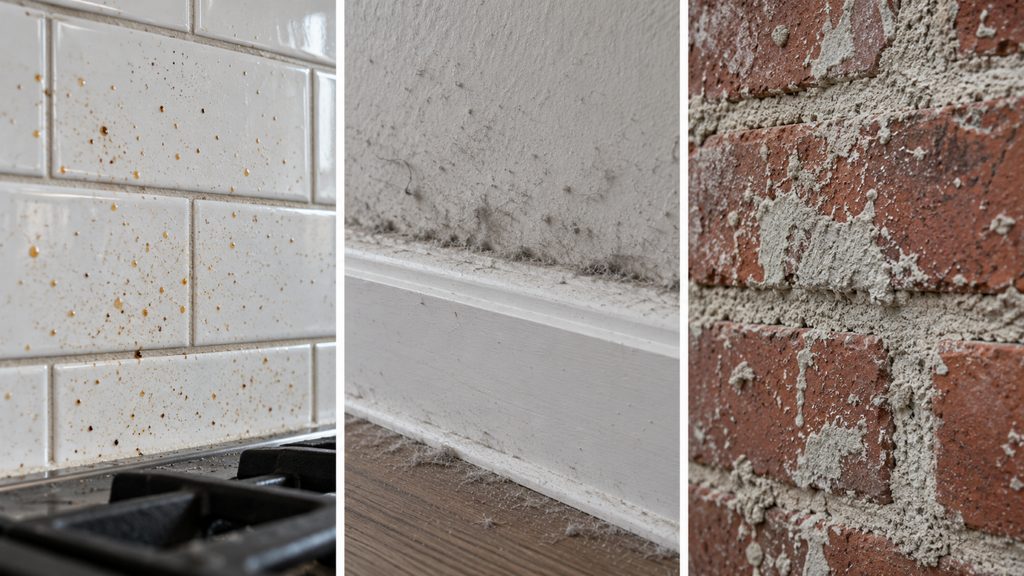
Before I say that, I check whether the area holds humidity and whether any plumbing runs close enough to wet the material. With neither, mold has no way to start, since the EPA notes that spores will not grow without moisture. I tell the client no test is needed, and I leave.
Testing earns its place when a musty odor has no visible source, a hidden wall or HVAC problem is suspected, rooms need comparing, an insurer, landlord or attorney needs documentation, or finished remediation needs clearance. Outside those cases, the most useful thing an inspector can hand you is a straight answer.
Questions people ask before hiring someone to test for mold
Why do two quotes for mold testing in NYC differ by hundreds of dollars?
The sample count drives most of the gap. At Prime Aire, the first sample is included and each additional one costs $95, so five extra samples add $475 before tax. Ask what each proposed sample would change before you approve it.
How long do lab results take after a mold test?
Standard lab turnaround is 2 to 3 business days, and the written report arrives on that schedule. If a closing or lease deadline cannot wait, Prime Aire offers 24 hour rush lab service at $75 per sample, added to the standard price.
Do I need a licensed mold assessor for a small spot of mold in my Queens apartment?
Not if the mold covers 10 square feet or less. The New York State Department of Labor requires licensed professionals only above that size, and the rule is the same in Queens as anywhere else in the state. A small spot still means something stays wet, so fix the moisture before you clean.
Is it safe to scrub the mold off before the inspector comes?
No, leave it until after the inspection. Scrubbing puts spores into the air and erases the pattern an inspector reads to trace the water. If anyone at home has asthma or a weakened immune system, ask their doctor about avoiding that room until the work is done.
Can I test for mold myself with a home kit?
You can, but a kit cannot tell you whether you have a mold problem. The New York State Department of Labor notes that sampling almost always finds mold, and no state or national standard exists to grade the result. A kit also cannot find the moisture source.
Who you’re getting this from
I’m Yury Gershman. I have spent 20 years reading New York City buildings for where the water comes from, and I am the person on site for Prime Aire Mold Services. Prime Aire Mold Services holds New York State Mold Assessor Contractor License 26-6AY5I-SHMO and Mold Remediation Contractor License 26-6AXK6-SHMO, plus IICRC Water Damage Restoration Technician certification 293612, and has completed more than 8,000 mold assessments over 20 years. On any single New York project, it takes one of those two roles, never both.
Send the quote before you pay for the samples
If you already have a quote or a report you do not trust, email it to support@primeairemold.com or call (877) 307-5166, and we will tell you which samples would change the plan. Prime Aire Mold Services answers 24/7 and gives free quotes across New York City (Manhattan, Brooklyn, Queens, the Bronx and Staten Island), Westchester, Nassau and Rockland counties, and New Jersey.