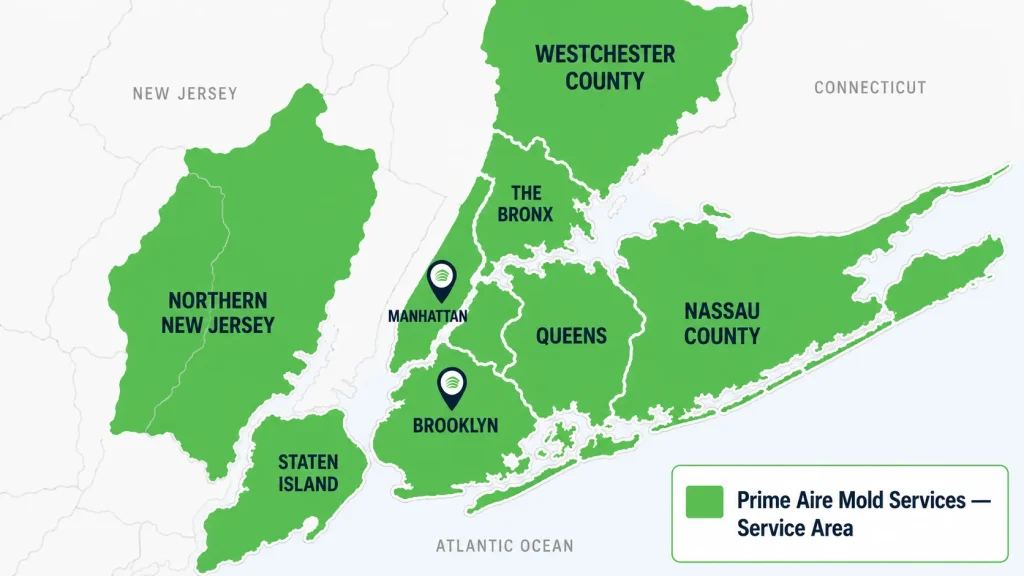
The cost of mold removal in the U.S. typically ranges from $10-$25 per square foot, with total project costs ranging from around $500 for smaller jobs (like a single bathroom) up to $30,000+ for extensive damage. Costs are higher in New York City and its five boroughs, generally ranging from $15–$35 per square foot.
Mold removal and remediation services from Prime Aire Mold Service are competitively priced between $10 and $30 per square foot, depending on job size and severity.
Cost of Mold at a Glance
Mold removal costs vary based on location, mold type, and the amount of prep and containment required. NYC and NJ metro-area labor rates generally run 25-40% above national averages, based on regional contractor pricing data, indicating these costs are higher in this region than in most national pricing guides.
Here’s a quick reference breakdown by affected area size and location:
| Area Size | National Cost Range | Average NYC Cost Range | Prime Aire Mold Services NYC/NJ Pricing |
| Small (under 10 sq ft) | $500-$1,500 | $700-$2,000 | $500-$1,000 |
| Medium (10-100 sq ft) | $1,500-$4,000 | $2,000-$5,500 | $1,000-$3,000 |
| Large (100-300 sq ft) | $3,500-$8,000 | $5,000-$11,000 | $3,000-$9,000 |
| Severe/Structural | $8,000-$30,000+ | $10,000-$35,000+ | $8,000-$25,000+ |
A single moldy bathroom wall caught early can run as little as $500. A basement or attic with months of undetected moisture damage can push past $10,000, and whole-home or structural remediation jobs regularly reach $30,000 or more.
One quick clarification: homeowners use “mold removal” and “mold remediation” interchangeably, but they mean different things. Mold removal refers to physically eliminating visible mold. Mold remediation is the complete professional process: containment, removal, treatment, air scrubbing, and post-clearance testing to confirm spore levels have returned to safe levels.
Prime Aire Mold Services offers both mold removal and full remediation (containment, treatment, air scrubbing, and clearance testing) in a single service, so you’re not paying two separate providers for two separate steps.
What Drives the Cost of Mold Remediation Higher or Lower
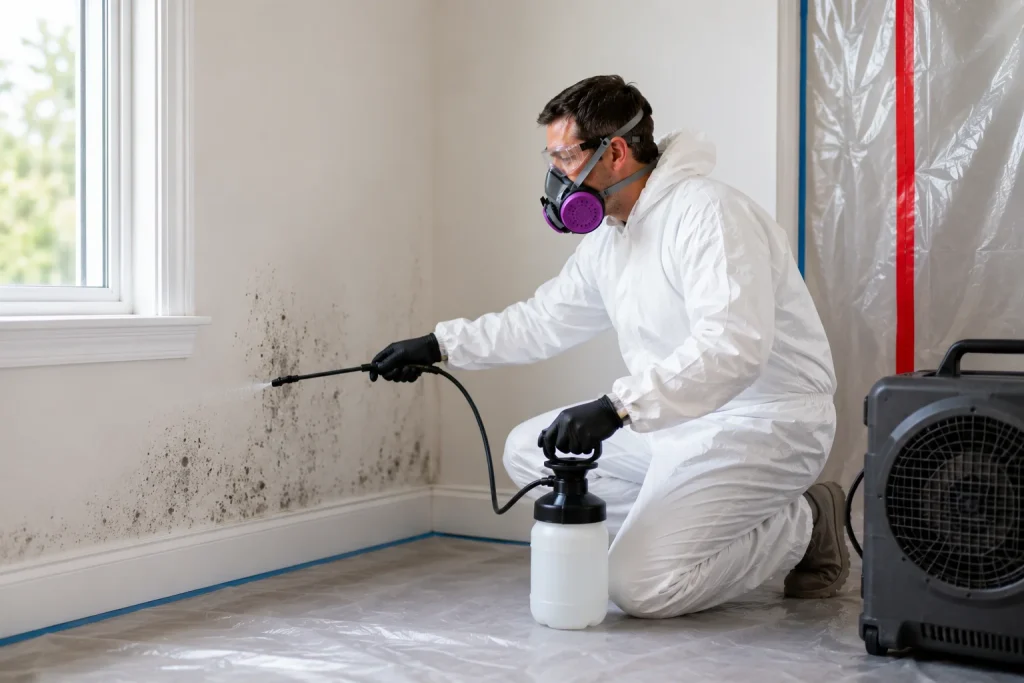
Five variables account for most of the spread between a $500 job and a $15,000 job. Understanding each one helps you ask better questions when collecting estimates.
How Square Footage Changes the Total Bill
Per-square-foot pricing scales with size, but not always in the direction you’d expect. Smaller jobs often carry a higher per-square-foot rate because setup, containment, and equipment costs get spread across fewer billable square feet. A 50 sq ft bathroom job might run $28 per square foot ($1,400 total), while a 200 sq ft basement job could drop to $20 per square foot ($4,000 total) because the contractor’s fixed costs stay roughly the same regardless of scope.
Why Mold Behind Walls or in Crawl Spaces Costs More
Access difficulty is one of the biggest drivers in the overall cost of mold remediation. Open-surface mold on a bathroom tile is straightforward to address. Mold inside a wall cavity, underneath subfloor boards, or in a low-clearance crawl space requires additional labor hours, demolition, and specialized equipment just to reach the affected area.
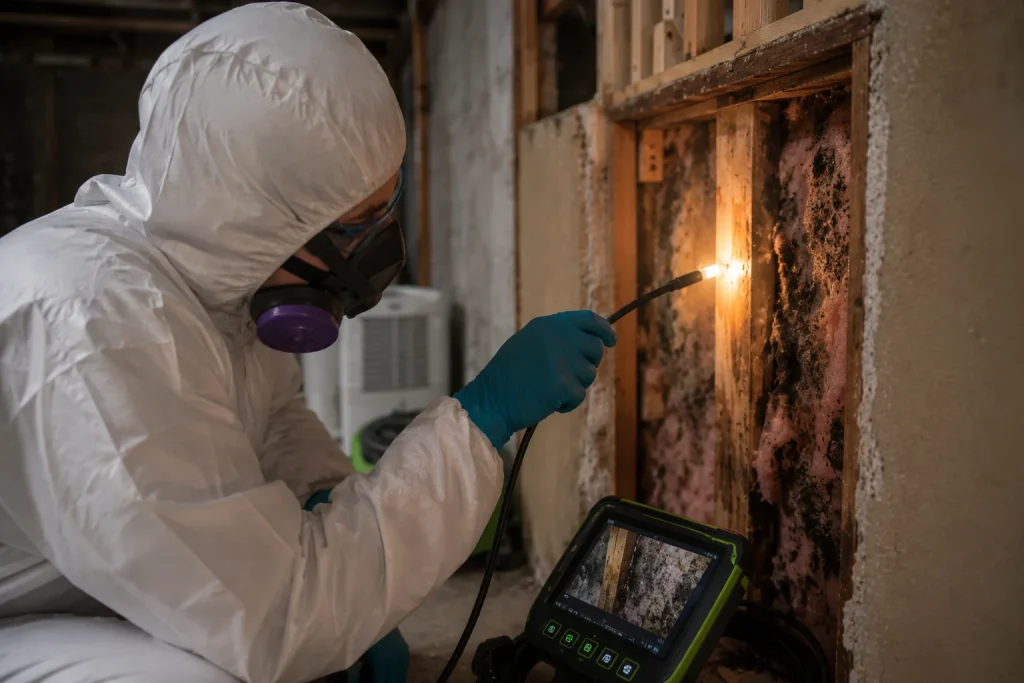
Equipment such as thermal imaging cameras and fiber-optic borescopes can locate hidden colonies without demolition, significantly reducing access-related labor costs. HVAC systems present the most expensive access challenge: mold inside ductwork or air handlers can add $3,000-$10,000 to a project because the entire system must be isolated, cleaned, and tested before it can safely circulate air again.
Does Mold Species Change What You Pay?
Yes, significantly. Common surface molds such as Cladosporium and Penicillium require standard containment and removal protocols. Stachybotrys chartarum, commonly called black mold, requires enhanced containment, higher-rated personal protective equipment, and more rigorous air scrubbing. Based on typical contractor pricing, expect black mold removal to run 20-40% higher than an equivalent surface mold job.
That cost difference reflects real differences in labor time and safety protocol, not contractor markup.
What Happens to the Price When Mold Has Damaged Drywall or Framing
Mold that has penetrated drywall, insulation, or wood framing cannot be cleaned; those materials must come out. Demo and disposal add $500-$5,000 or more depending on how much structural material is involved. That cost doesn’t include reconstruction, which is a separate line item covered later in this guide.
Mold Remediation Cost by Location in Your Home
Where mold grows determines how hard it is to access, contain, and treat, and that directly affects what you’ll pay. Here’s a zone-by-zone cost reference:
| Location | Cost Range |
| Bathroom | $500–$1,500+ |
| Basement | $500–$10,000+ |
| Crawl Space | $2,000–$8,000+ |
| Attic | $1,000–$10,000+ |
| HVAC/Ducts | $3,000–$10,000+ |
| Walls/Drywall | $1,000–$5,000+ |
| Whole-House | $10,000–$30,000+ |
Location affects professional mold remediation costs for three reasons: how difficult it is to physically access the area, how much containment is needed to prevent the spread of spores to clean areas of the home, and how close the mold is to HVAC systems that can distribute spores throughout the building.
Properties in New York and New Jersey add an extra layer of complexity to location-based pricing. Pre-war buildings throughout Manhattan, Brooklyn, and the Bronx often feature original plaster walls, older plumbing systems, and minimal vapor barriers, all conditions that make moisture intrusion harder to detect and easier to ignore until it becomes expensive.
Coastal humidity from the Atlantic accelerates mold growth in basements and crawl spaces across both states, and NYC’s climate and mold interact in ways that push remediation costs above national benchmarks for nearly every location category listed above.
The professional mold remediation costs shown in the table above are based on real regional experience. With 20+ years and 8,000+ completed projects across the NYC Metro and Northern NJ, Prime Aire Mold Services has documented how location-specific complexities drive final project costs and what it actually takes to remediate each zone correctly.
DIY Mold Removal vs. Hiring a Professional: A True Cost Comparison
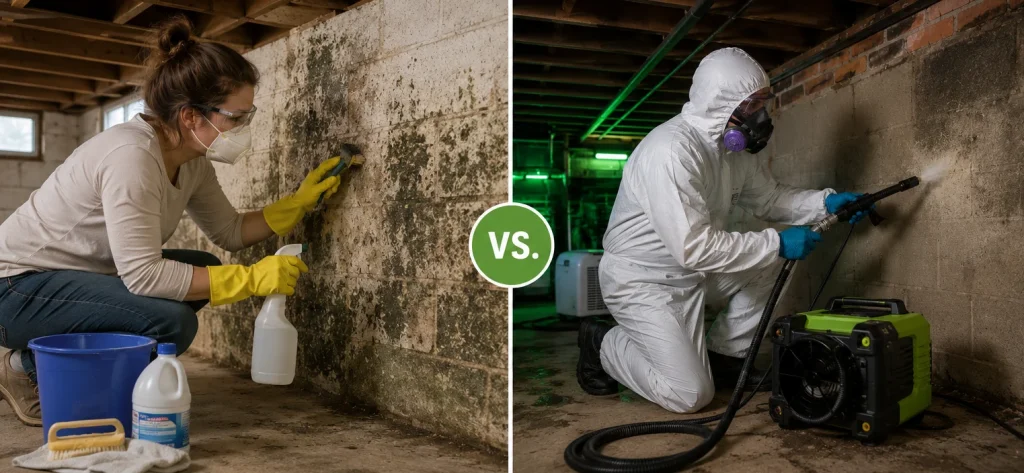
DIY mold removal works in limited circumstances and creates serious risk in others. Here’s the honest financial and safety breakdown.
When DIY Is Safe and Cost-Effective
Surface mold covering less than 10 square feet on a non-porous material such as ceramic tile grout, a painted concrete wall, or a glass shower door can be addressed by a homeowner with the right supplies. Here’s what a proper DIY kit actually costs:
- EPA-approved mold cleaner: $10–$50
- N-95 respirator: $20–$60
- Disposable protective suit: $15–$30
- Containment plastic sheeting: $30–$80
- HEPA vacuum rental: $50–$100 per day
Total for a small surface job: $125–$320. That’s a reasonable spend if the mold is truly surface-level, there’s no musty odor coming from inside the wall, and the area has no history of water intrusion or flooding.
When DIY Puts Health and Property at Risk
Professional remediation is not optional when mold follows after water damage, or when any occupant has respiratory conditions, asthma, or a compromised immune system.
The practical problem with DIY in these situations isn’t just safety; it’s economics. Without proper containment and air scrubbing, disturbing a larger mold colony spreads spores to previously clean areas, expanding the scope of the problem. Most incomplete DIY attempts result in mold returning within weeks because the source of moisture was never identified. The homeowner then pays professional mold removal costs anyway, plus the cost of the failed DIY attempt, raising the total above what it would have been with a certified professional.
As the EPA notes about mold cleanup in your home, professional cleaners or remediators may use methods not covered in basic mold cleanup guidance for homes. That gap in methods, including thermal containment chambers, HEPA air scrubbers, negative air pressure systems, and fiber optic borescopes to detect hidden colonies, is exactly why professional remediation produces durable results that DIY approaches can’t replicate.
IICRC certification and EPA credentials are the standards that separate qualified remediators from general contractors, and they are what you should verify before hiring anyone for mold work.
How to Keep Mold Remediation Costs as Low as Possible
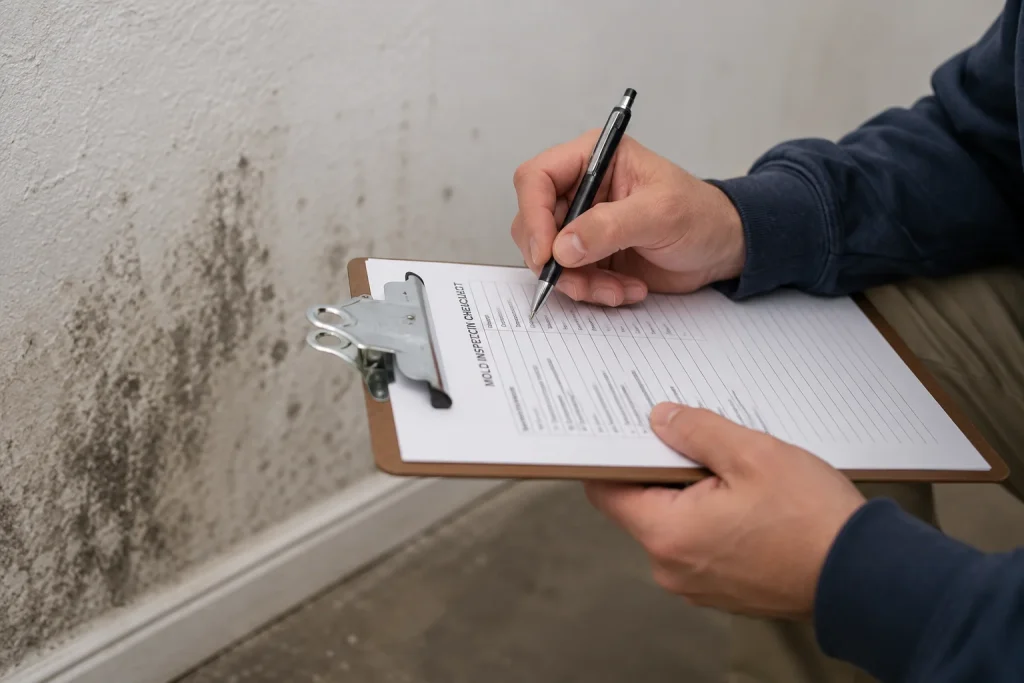
The single most effective cost-reduction strategy is also the most obvious: act quickly. Mold colonies can roughly double in affected area every 24-48 hours in humid conditions. A $500 bathroom job left unaddressed for a week can become a $3,000 job. The average cost of mold removal climbs with every day of delay.
Beyond speed, here are specific strategies that actually reduce your bill.
- Get at least three written estimates. Prices for comparable mold removal jobs vary 30-50% between contractors in the same market. That spread is real and worth the time it takes to make three phone calls.
- Bundle inspection and remediation with the same company. Many certified remediators discount clearance testing when it’s booked alongside the remediation itself, since the team is already on-site with the equipment.
- Check your insurance coverage before any work begins. If mold resulted from a burst pipe, storm damage, or another covered peril, your policy may offset a significant portion of the mold remediation costs. Document the water event with photos and timestamps before touching anything.
- Address what causes mold in the first place. Fixing leaks, improving ventilation, and controlling indoor humidity are the most cost-effective prevention steps available, and skipping them means remediation costs eventually return.
For property owners managing ongoing humidity challenges, the strategies outlined in defeating mold issues apply directly to long-term prevention and cost control. - Don’t hire on price alone. The cheapest estimate can skip critical steps such as air scrubbing, proper containment barriers, and post-clearance testing. Cutting those corners means mold returns, and you pay twice.
With IICRC-certified professionals, state-of-the-art thermal imaging, and 8,000+ completed projects across the NYC Metro and Northern NJ, Prime Aire Mold Services identifies the root cause so that remediation costs stay contained and mold stays gone.
If you’re in New York or New Jersey and want to know exactly what you’re dealing with before committing to a budget, reach out to Prime Aire Mold Services for a professional assessment.
Mold remediation costs are highly variable, but they’re not unpredictable once you understand the factors at play. Whether your situation calls for a $500 surface treatment or a $15,000 structural remediation, starting with accurate information and acting quickly helps keep the cost as low as possible.