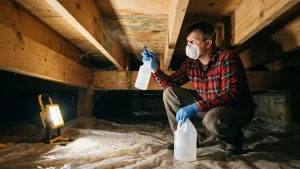
Wondering how to get rid of mold in your attic in NYC? First, fix the moisture source; then remove and treat the contaminated material; and finally, ensure airflow to prevent regrowth.
Trying to clean mold without stopping the leak or condensation that caused it just brings it back within weeks. If the affected area is less than 10 square feet, you can treat materials yourself with a mild detergent and water. If it’s more than 10 square feet, you are legally required to hire a licensed contractor for mold removal in NYC.
Professional attic mold remediation costs $10 to $30 per square foot depending on job size and severity.
Have mold in your NYC property and don’t want to deal with it yourself?
Key Takeaways
- Fix the moisture source first (roof leak, blocked vents, misvented bath fan); otherwise, mold returns.
- Under 10 sq ft, hard surface, no sensitive occupants: DIY is fine per EPA guidance.
- 10 sq ft or more: NYS Labor Law Article 32 requires a licensed assessor to write the plan and a separate licensed contractor to do the work.
- Process: contain → remove porous materials → dry within 24–48 hrs → improve ventilation → confirm with a clearance test.
- Professional remediation Cost: $10–$30/sq ft; most jobs $1,500–$6,000, severe cases up to $10,000–$15,000.
- Prevent recurrence: keep indoor humidity at 30–50%, vent fans outside, keep soffit/ridge vents clear, and inspect 2x/year.
- Tenants: complain in writing; escalate to 311/HPD if ignored.
Signs of Attic Mold
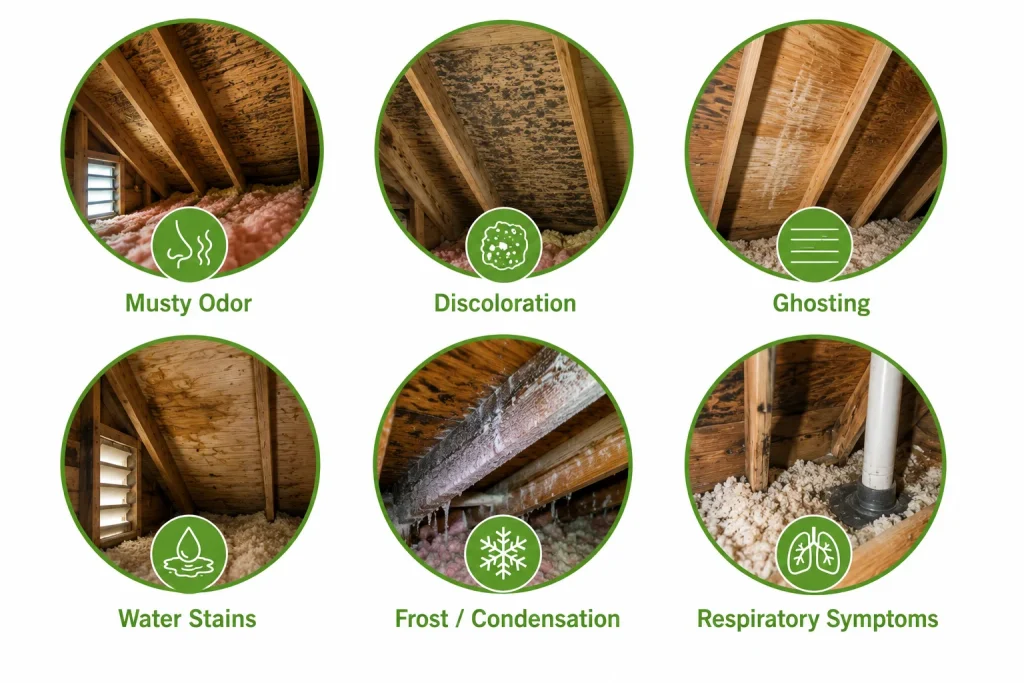
Attic mold often grows for months without being noticed. Watch for:
- Musty odor near the attic hatch or top-floor ceilings, even before mold is visible
- Discoloration: Black, green, gray, or white patches on decking, rafters, or insulation (color doesn’t indicate severity)
- “Ghosting”: Faint dark lines on ceilings below the attic, tracing the joists
- Water stains on the roof deck, signaling an active or past leak
- Frost or condensation on rafters or sheathing in winter, from warm indoor air meeting a cold roof
- Worsening allergy or respiratory symptoms at home that ease when you’re away from the house
How to Get Rid of Mold in Your Attic: Step by Step
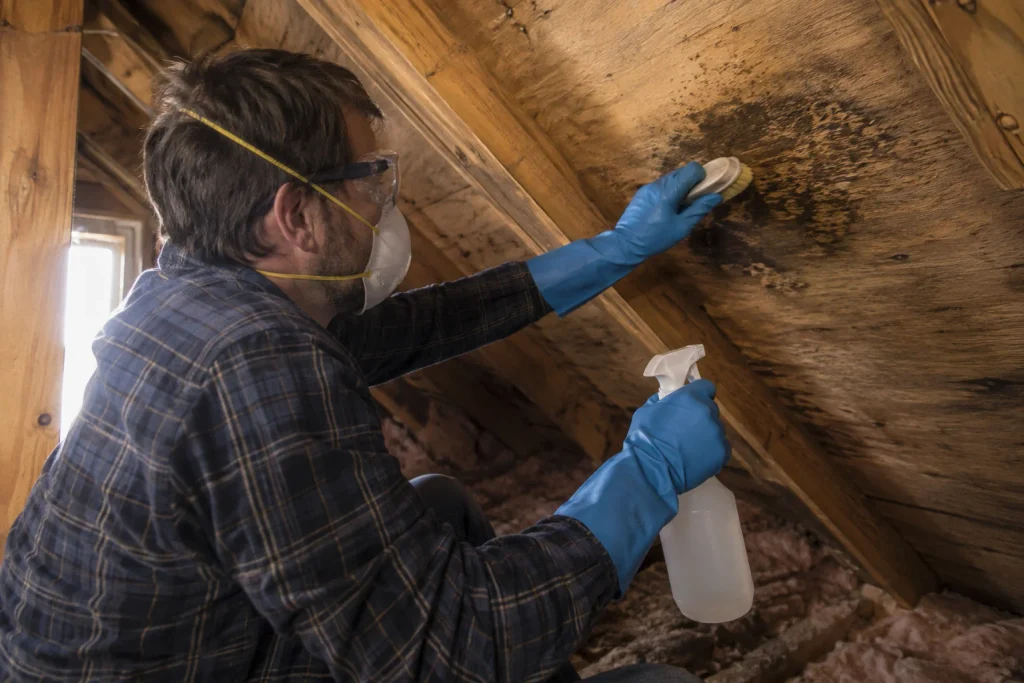
For a small, isolated spot, under 10 square feet, on a hard surface, with no health-sensitive occupants, EPA guidance says a homeowner can typically handle cleanup themselves. Property owners can buy an N-95 respirator, gloves, and mild detergent to get started.
Here are the steps that actually work.
- Find and fix the moisture source. Attic mold almost always traces back to a roof leak, blocked soffit vents, a bathroom fan venting into the attic instead of outside, or warm indoor air condensing against a cold roof deck in winter. Skip this step and the mold returns.
- Contain the space. Seal the attic access point and any connecting ductwork so spores don’t spread into living areas while work is underway— most homeowners can stay in their home during remediation once containment is set up.
- Remove contaminated material. Moldy fiberglass insulation almost always needs to be bagged and replaced; it’s too porous to clean reliably. Cellulose insulation is even more mold-prone and typically can’t be salvaged if contamination is significant. Hard surfaces like rafters, joists, and roof decking can usually be scrubbed with mild detergent and kept.
- Dry the space completely. The EPA recommends drying affected materials within 24–48 hours of any water event and confirming moisture levels are back to normal before closing up the job.
- Improve ventilation. Ridge vents, soffit vents, and keeping indoor humidity between 30–50% (per EPA guidance) are what keep mold from coming back once it’s gone.
- Test to confirm the job worked. A post-remediation mold clearance test, not just a visual check, is the only way to confirm the space is actually clear.
What to Do If Mold Exceeds 10 Square Feet
If you’re in New York, that 10-square-foot line isn’t just a safety guideline; it’s the law. NYS Labor Law Article 32 requires a state-licensed mold assessor to write the remediation plan and a licensed contractor to perform the work on any project over 10 square feet.
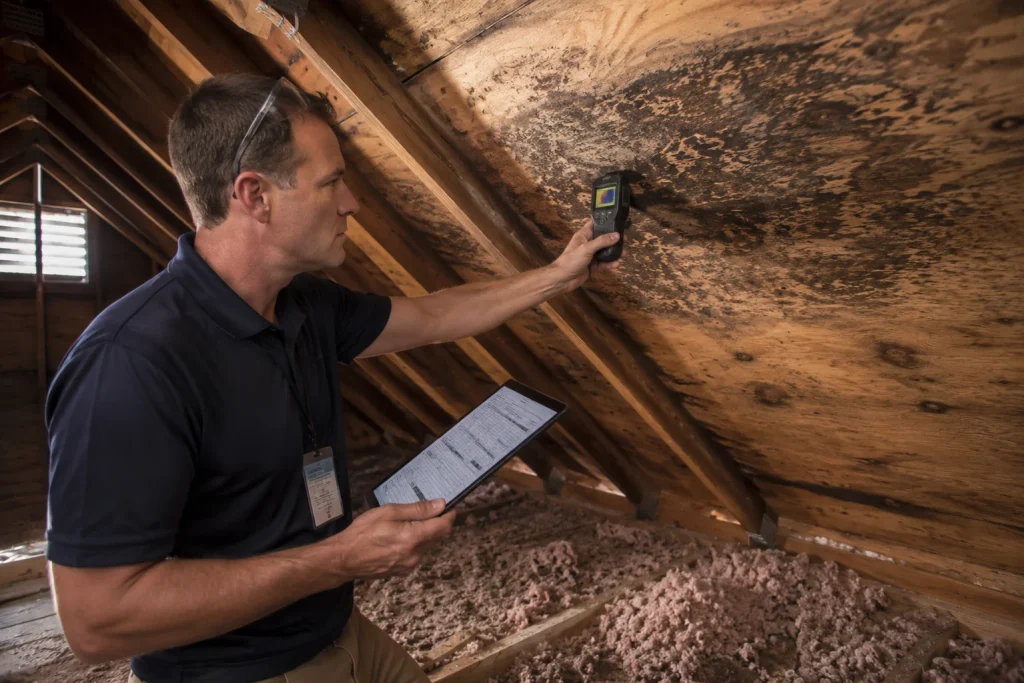
What property owners need to do:
- Bring in a licensed assessor. A NYS Department of Labor-licensed mold assessor inspects the area and writes the remediation plan.
- Hire a different company to do the removal. The assessor and the remediator can’t be the same business; state law requires that separation so one company isn’t grading its own work.
- Fix what caused it. Repair the leak or moisture source behind the mold; don’t just cover it up.
- Bring the assessor back for clearance. The same assessor who wrote the plan confirms afterward that the space is actually mold-free.
What tenants should do:
- Put the mold complaint to the landlord in writing; a certified letter creates a paper trail.
- Call 311 or file directly with NYC HPD if the landlord doesn’t respond, or if the cleanup isn’t using licensed professionals.
What Attic Mold Removal Actually Costs
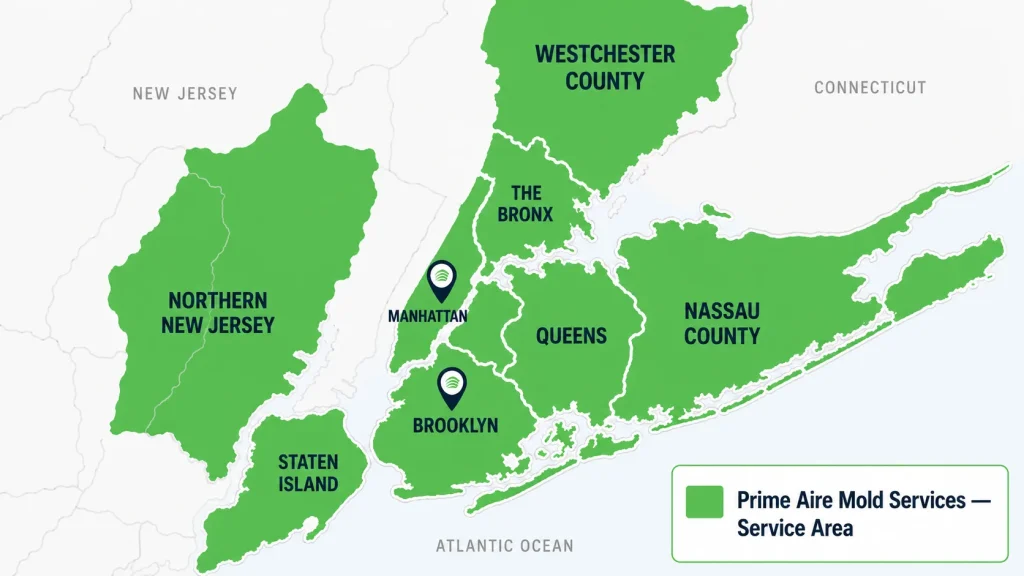
Professional attic mold remediation typically costs $10–$30 per square foot nationally, or $1,000–$8,000 for most jobs. Prime Aire’s rates fall within this same national range across NYC, Westchester, Nassau County, and North Jersey.
Tier | Scope | Typical Cost |
Small, isolated spot | Under 10 sq. ft., hard surface, easy access | Near the low end of $10–$30/sq. ft. |
Standard remediation | 10–100+ sq. ft., insulation removal, moderate access | $1,500–$6,000 (most jobs) |
Extensive contamination | Insulation/decking replacement, structural repair | $10,000–$15,000 |
What drives the price:
- Access: Walk-up attics cost less than tight crawl spaces
- Insulation type: Fiberglass is cheaper to replace than cellulose
- Contamination depth: Surface mold vs. mold in decking/framing
- Moisture source repair: A leaky roof or poor ventilation adds to the total
The caveat: these ranges are only a starting point. Mold often spreads behind decking and inside insulation where you can’t see it, so an accurate quote requires an in-person inspection.
See our guide on how long mold remediation takes for more detail.
Preventing Attic Mold From Coming Back
- Keep indoor relative humidity between 30% and 50%
- Route bathroom and kitchen exhaust fans outside: never into the attic
- Check that soffit and ridge vents aren’t blocked by insulation
- Inspect the attic twice a year, and always after heavy rain or snow
- Fix roof leaks within 24–48 hours of discovery
Hire Professional Mold Remediation Services Today
With 20+ years and 8,000+ completed mold projects in the New York metro, Prime Aire runs post-remediation clearance testing on every job we finish, and 95% pass on the first test. That first-pass rate is our internal number, not an industry average, and it’s why every job includes infrared thermal imaging at no charge: it confirms the moisture source is gone before we call a job done, not just the visible mold.
Every Prime Aire mold removal and remediation project also carries a 90-day satisfaction warranty. Whether you need mold inspection and testing, remediation, HVAC decontamination, water damage restoration, or post-clearance mold testing, we’re here to help.
FAQ
Can I Remove Attic Mold Myself?
If the affected area is under 10 square feet, on a hard surface, and you don’t have health-sensitive occupants in the home, EPA guidance allows DIY cleanup with proper protective equipment. In New York, once the area exceeds 10 square feet, state law requires a licensed mold assessor and remediation contractor.
How Long Does Attic Mold Remediation Take?
Most attic jobs take one to three days, including containment setup, removal, drying, and clearance testing. Extensive jobs requiring insulation and decking replacement can take a week or more.
Will Homeowners Insurance Cover Attic Mold Removal?
Coverage depends on the cause. Sudden, accidental water damage, like a burst pipe, is often covered. Mold from long-term leaks, poor maintenance, or high humidity typically is not. Check your specific policy language before assuming either way.
Does Attic Mold Come Back After Remediation?
Only if you don’t fix the moisture source that caused it. Remediation without repairing the leak, vent, or ventilation problem behind it is a temporary fix.