Can you stay in your home during mold remediation? It depends on the extent of contamination. For small areas (under 10 square feet per EPA guidelines), you can usually stay home if the area is properly contained. For larger infestations, especially with HVAC involvement or vulnerable household members (infants, elderly, immunocompromised, or those with asthma/allergies), mold remediation professionals typically recommend temporary relocation until containment and mold clearance testing confirm the space is safe.
The key factors that determine whether staying home during mold remediation is even realistic:
- The total square footage of mold affected
- The location of the mold in your home
- The remediation methods being used
- Who lives in the household (health status, age, immune function)
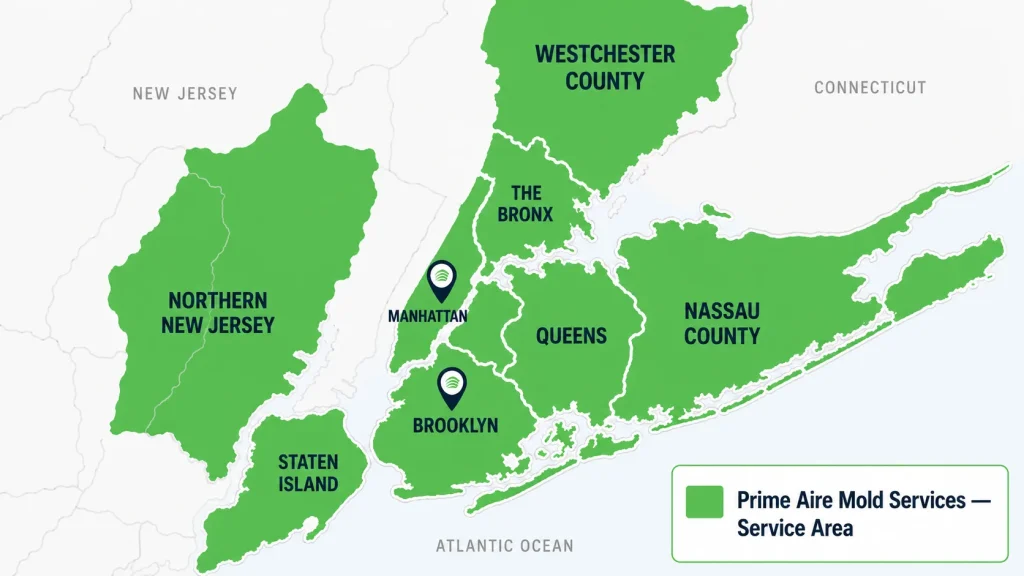
These are the same variables Prime Aire evaluates across every remediation assessment in our 20+ years of work across the NYC Metro and Northern NJ. The sections below walk through each one so you can make a confident, informed decision.
When Can You Stay in Your Home During Mold Remediation?
The honest answer: it depends on your health and the scope of work, but everyone staying should understand the real risks.
Mold remediation stirs up spores that would otherwise sit dormant on surfaces. During active work, airborne spore counts can spike significantly, not just inside the contained work area, but in adjacent rooms as well. For most people, that means potential respiratory irritation, allergy flare-ups, headaches, and general discomfort.
A healthy adult in a limited remediation scenario may find the risks manageable with proper precautions. For those with asthma, compromised immune systems, or chronic respiratory conditions, exposure during active work carries much higher stakes.
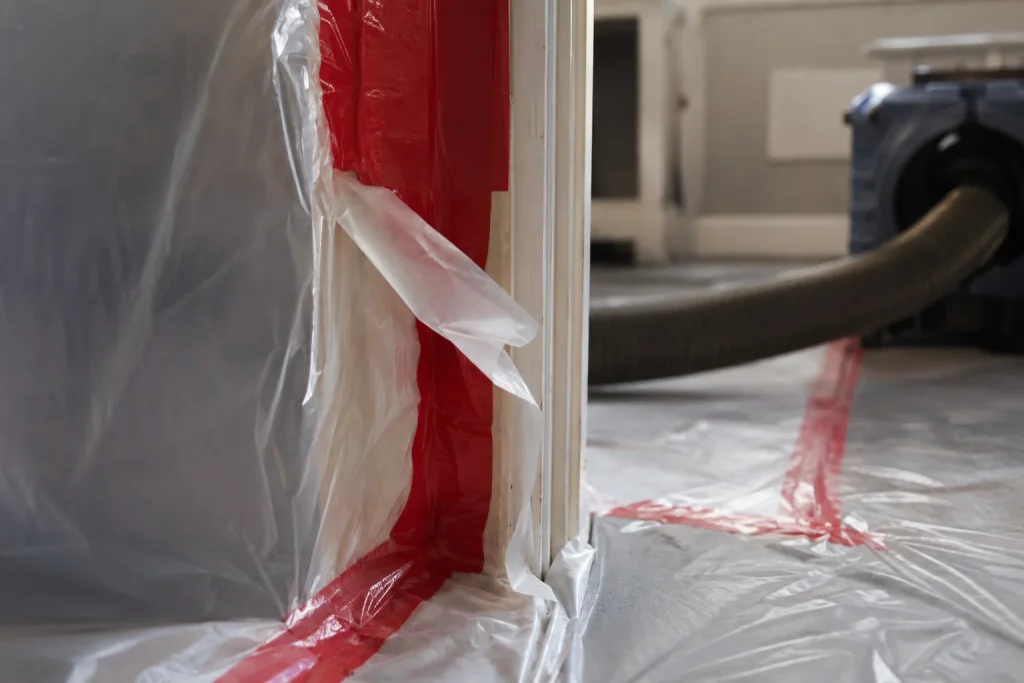
Professional remediators use containment barriers and negative-air-pressure machines to minimize spore spread. These methods are effective but not foolproof. Air moves, barriers shift, and containment zones have entry and exit points.
Staying home during mold remediation may be tolerable for a healthy adult in a limited situation. Children, elderly individuals, pregnant women, and anyone with asthma or immune challenges face elevated risk; leaving is the responsible call even during minor work.
When You Absolutely Should Not Stay in the Home
Certain conditions make staying during remediation genuinely unsafe, not just uncomfortable. If any of the following apply, plan to leave for the duration of the work.
1. Mold covers more than 10 square feet.
The EPA uses 10 square feet as the threshold separating minor cleanup from large-scale remediation. Beyond that size, contamination levels and remediation intensity create conditions incompatible with normal household activity. Learn more about what the mold remediation process involves at this scale.
2. Mold is in the HVAC system.
HVAC mold is a whole-home problem. When your system runs, it can carry spores to every room in the house. There’s no safe corner to retreat to.
3. A household member is pregnant, elderly, a young child, or immunocompromised.
These individuals face elevated health risks from mold exposure. Leaving is the responsible call.
4. Black mold (Stachybotrys) is confirmed or suspected.
Stachybotrys is a mycotoxin-producing species; confirmed or suspected presence requires specialized containment and remediation protocols that make occupancy unsafe.
5. Remediation requires full containment of multiple rooms.
When containment spans several areas, the remaining living space is minimal and often shares air pathways with work zones.
6. Work extends beyond a single day.
Multi-day remediation means prolonged exposure to elevated spore counts and chemical treatments. If the scope is large and the mold remediation timeline is long, leave.
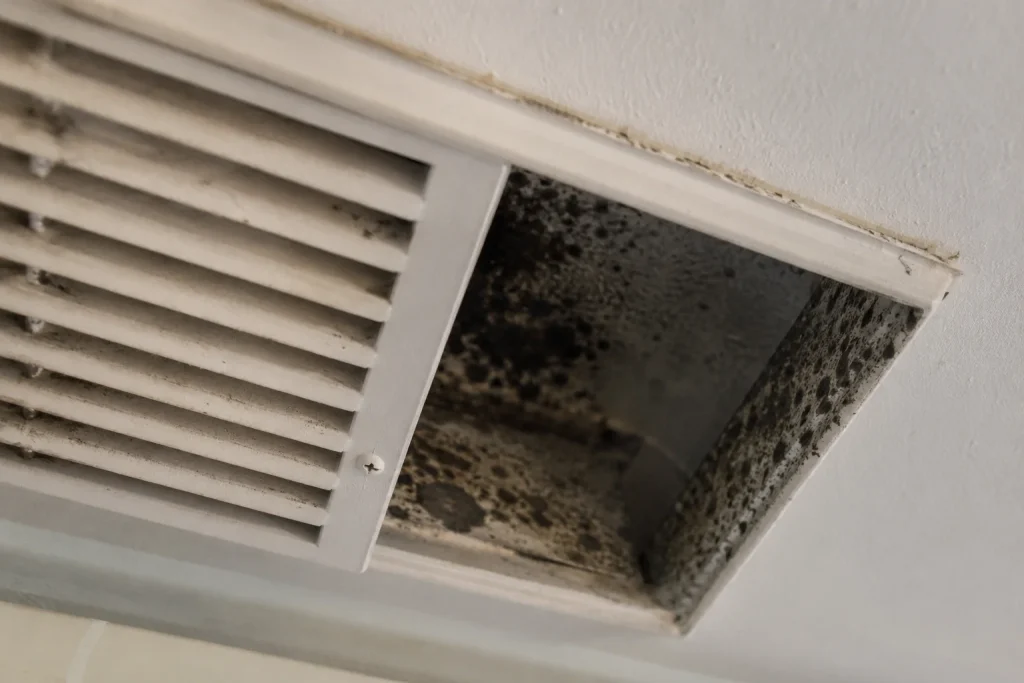
Deciding whether to stay or go isn’t a personal preference call. It’s a safety assessment, and Prime Aire’s certified remediation professionals assess all of these variables before work begins.
What It Actually Feels Like to Stay During Remediation
Staying in your home during the process is a choice some people make, but it helps to know exactly what you’re signing up for before you commit.
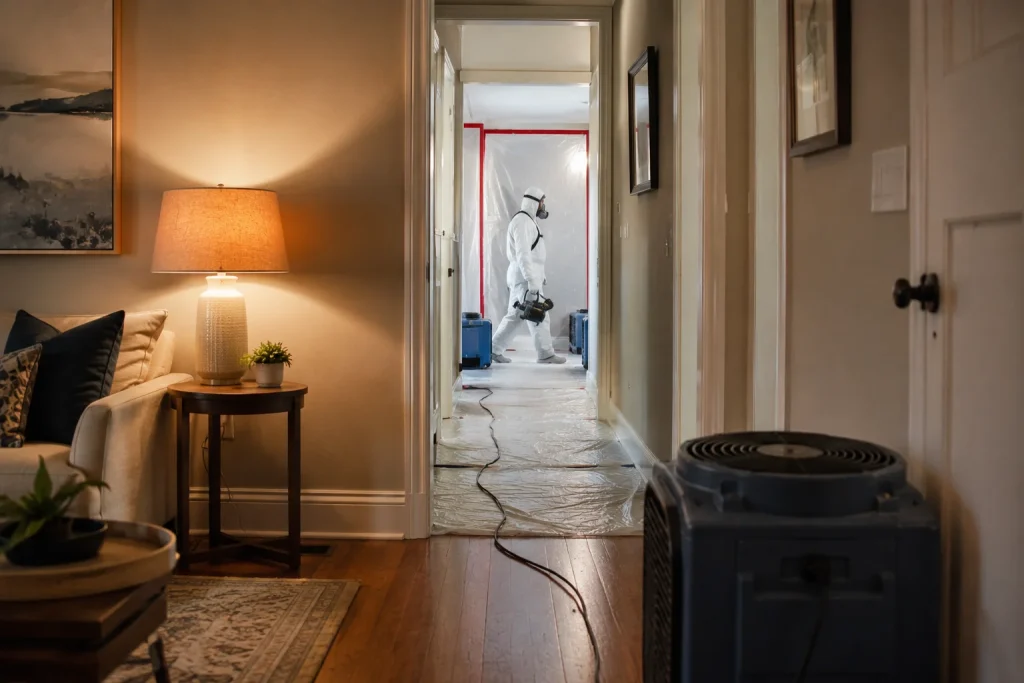
Air scrubbers and negative pressure machines run continuously throughout the workday. These are not quiet appliances; they produce consistent, loud mechanical noise that does not pause between work hours. If you work from home or have young children, plan for that reality from the start.
Antimicrobial treatments carry a distinct chemical smell that can linger in shared areas even with containment in place. Workers in full protective suits and respirators will move through shared spaces, which many homeowners find psychologically stressful even when the work is going exactly as planned.
Staying home during mold remediation means following strict personal protocols:
- Keep windows open in unaffected areas to maintain fresh airflow
- Stay on the opposite end of the home from active work zones
- Wear an N95 mask if you need to move through any shared spaces
- Never enter the containment zone under any circumstances
A single-day remediation in one isolated room might feel disruptive but manageable. Multi-day work involving several areas will feel far more intrusive hour by hour; the noise, the smell, the restricted movement, and the psychological weight of watching a remediation unfold around you add up quickly.
Will Your Insurance or Lease Cover Temporary Housing?
The short answer: sometimes, but only if you document things correctly and ask the right questions before remediation starts.
If you own your home, some homeowner’s policies include “loss of use” / “additional living expenses” (ALE) coverage, but it typically only applies if the mold stems from a sudden, covered peril (like a burst pipe), not slow-building humidity or neglect, which insurers commonly deny.
Before remediation starts:
- Call your insurer and ask directly whether ALE applies to your situation
- Get a written scope of work from your remediation company to support the claim
- Document everything: photos, dates, written notes
Prime Aire provides written scope-of-work documentation that homeowners and renters have used to support insurance claims and landlord disputes across 8,000+ completed projects.
If you rent, landlords are generally responsible for mold caused by building issues, not tenant behavior.
- New York tenants have habitability protections under state and local law.
- New Jersey tenants are protected under the Truth-in-Renting Act.
If mold makes your unit uninhabitable: document conditions and notify your landlord in writing immediately. If they don’t act, you may have grounds to demand temporary housing assistance or rent abatement.
Bottom line: whether you own or rent, act fast, get everything in writing, and get professional guidance before work begins.
Making the Right Call: A Simple Framework for Your Household
A direct if/then framework clarifies when you can and cannot stay in your home during mold remediation.
Staying may be manageable if:
- The affected area is under 10 square feet
- Mold is in one isolated, containable room
- No household members are pregnant, elderly, very young, or health-compromised
- Remediation will be completed in a single day
Leave for the duration if:
- Mold is widespread or covers more than 10 square feet
- The HVAC system is involved
- Multiple rooms require containment
- Anyone in the home has elevated health vulnerability
- Work extends beyond one day
This framework gives you a starting point, but a professional assessment of your specific situation should always guide the final call. The scope of contamination, the remediation methods required, and the health profile of everyone in your household all carry real weight in that decision.
Prime Aire Mold Inspections brings 20+ years of experience and 8,000+ completed projects across NYC Metro and Northern NJ, plus IICRC- and EPA-certified expertise and state-of-the-art non-invasive diagnostic tools, to every assessment. If you’re unsure whether it’s safe to stay or leave, start with a professional mold evaluation before work begins.