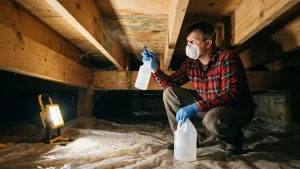
Short answer: The most common places for mold in New York City homes are basements and bathrooms in buildings past 30 to 40 years old, and the most overlooked is the inside of the HVAC system. Most basements I inspect have growth. Humidity held above 55 percent for three or four days is the condition that starts it.
Every foundation wall on a house older than 40 years has groundwater pressing against its outside face, and some of it always gets through. It moves into the brick or concrete as dampness, evaporates off the inside face and joins the basement air. A hygrometer reads it as humidity.
That water rarely pools, so owners do not notice it until something down there starts growing. That is why the basement sits at the top of my list.
Call Prime Aire Mold Services at (877) 307-5166, day or night, if you are not sure your basement needs testing at all. If it does not, we will say so.
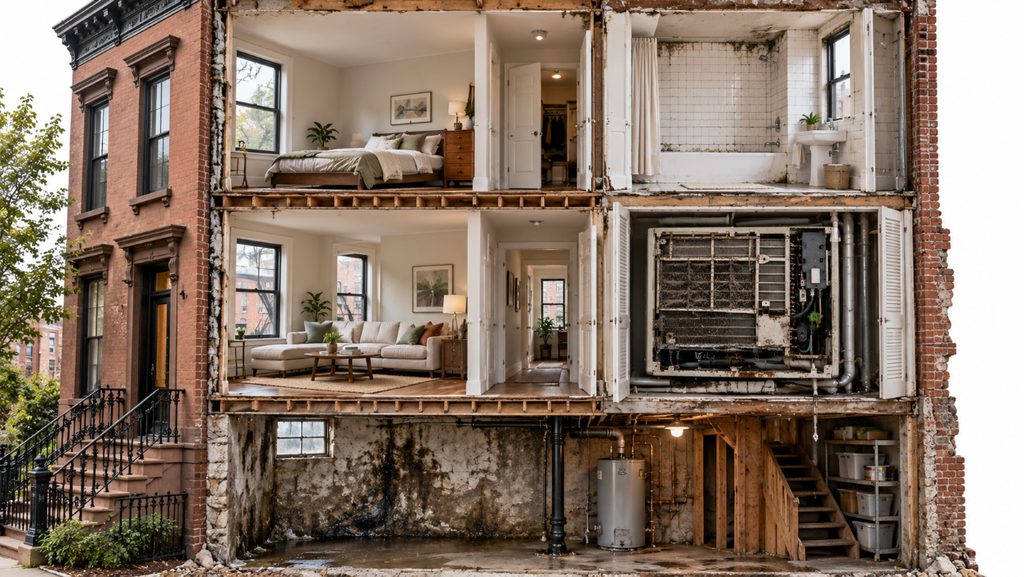
Basements lead the list of common places for mold
Most basements I inspect have mold growing on wood, drywall or paper somewhere. The reasons stack up. A basement sits below grade, with wet soil against its walls. The main plumbing runs through it, and gravity sends every leak in the house down toward it.
When I trace the water in a basement, the source splits about 50-50. Half the time it is plumbing, or humidity the owner trapped by finishing the space without ventilation. The other half, it is groundwater working through the foundation.
The New York State Department of Health’s Mold and Your Home guide lists damp basements, indoor plumbing leaks and outdoor drainage problems as common sources of household moisture.
An older foundation never stops letting some water in, so the lasting fix is keeping the basement air dry. Once growth reaches the framing, removal is on the table, and our breakdown of basement mold remediation costs in New York covers the price.
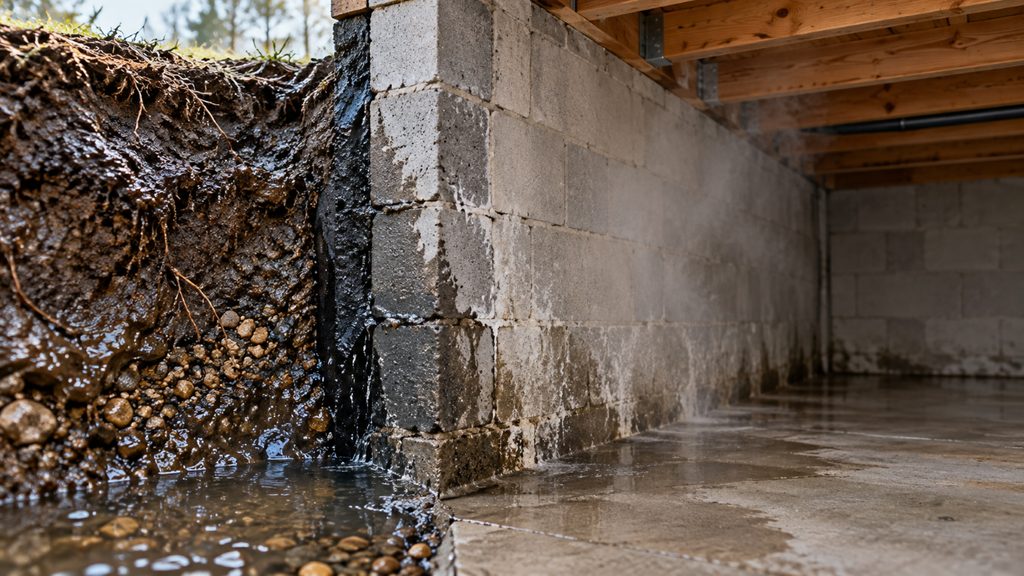
How long humidity has to stay high before mold grows
Duration matters more than the peak.
A single day at 80 percent humidity does no harm. Three or four days above 55 percent is when a basement starts growing mold.
Prime Aire Mold Services
Wet material moves faster. Once drywall, wood or paper is actually wet, growth can start in about 24 hours, which is why the EPA tells homeowners to dry water-damaged areas within 24 to 48 hours. A hygrometer left in the basement for a week shows you which situation you have.
| Reading | What it means | What to do |
|---|---|---|
| Under 55 percent, averaged over a week | The space is keeping its moisture in check | Keep doing what you are doing, and recheck after heavy rain |
| 80 percent for one day, after showers | A normal spike from bathing or plumbing use | Run the exhaust fan; nothing more is needed if it drops by the next day |
| Above 55 percent for three or four days | Conditions for mold growth | Find the source: foundation, plumbing or missing ventilation |
| Drywall, wood or paper still wet after 24 hours | Growth can already be starting | Dry it inside the EPA’s 24 to 48 hour window, or remove it |
Bathroom mold starts at the tub line and behind the tile
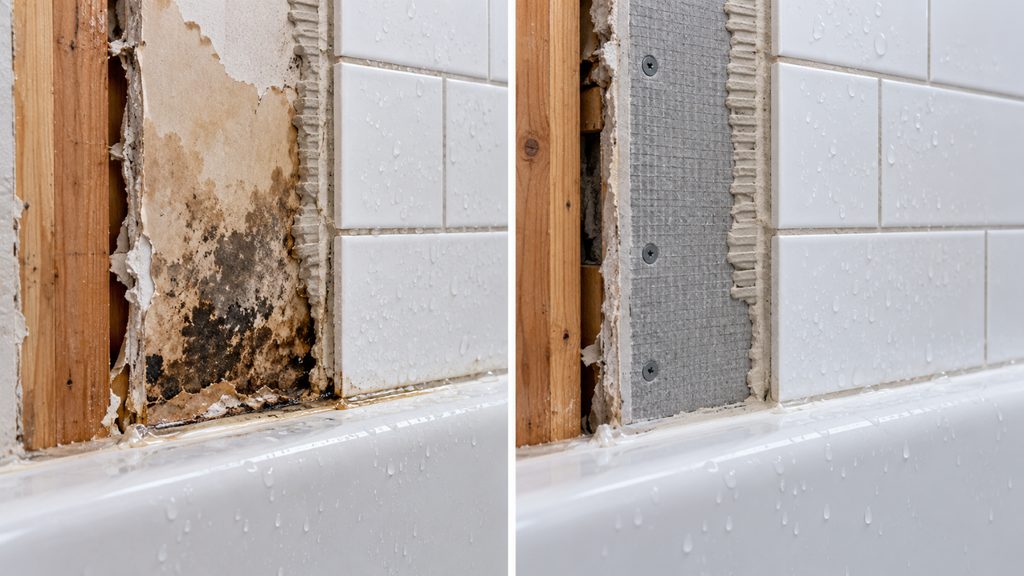
In apartments, the bathroom takes the basement’s place. Once a building passes 30 to 40 years old, I expect to find some growth in the bathroom, and it starts where shower water hits the wall and stays: behind the backsplash, and along the base where the tile meets the tub.
Grout that was never sealed properly soaks up that water and passes it to whatever sits behind the tile. What sits there decides how fast the growth spreads.
Tile belongs on cement board, which gives mold nothing to feed on. In newer buildings I often find tile set on plain sheetrock instead, and sheetrock carries a paper face. Once water gets past the grout, that paper grows mold fast while the tile in front of it still looks clean, which is how mold hides inside walls.
Age wears out the older bathrooms. Shortcuts behind the tile catch the newer ones.
Inside the HVAC system, where dirt and growth look alike
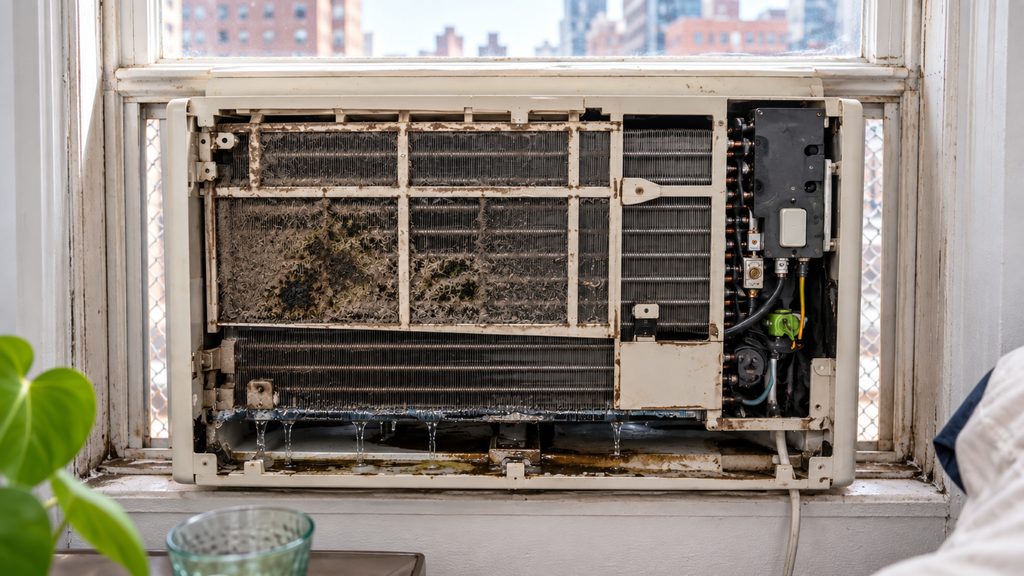
Owners tell me the system is just dirty, or that the fuzz around the air handler is cat hair. Sometimes it is. Other times we open the unit and find the inside covered in growth.
The cause is maintenance. A system that is not running properly holds moisture inside the cabinet, and the dust collecting in there becomes food. The grille in the ceiling tells you very little, because the answer sits inside the unit and seeing it means opening the cabinet.
The fix is HVAC duct and vent decontamination, plus the maintenance that stops the moisture from building again.
Brick stains that look like mold and need no removal
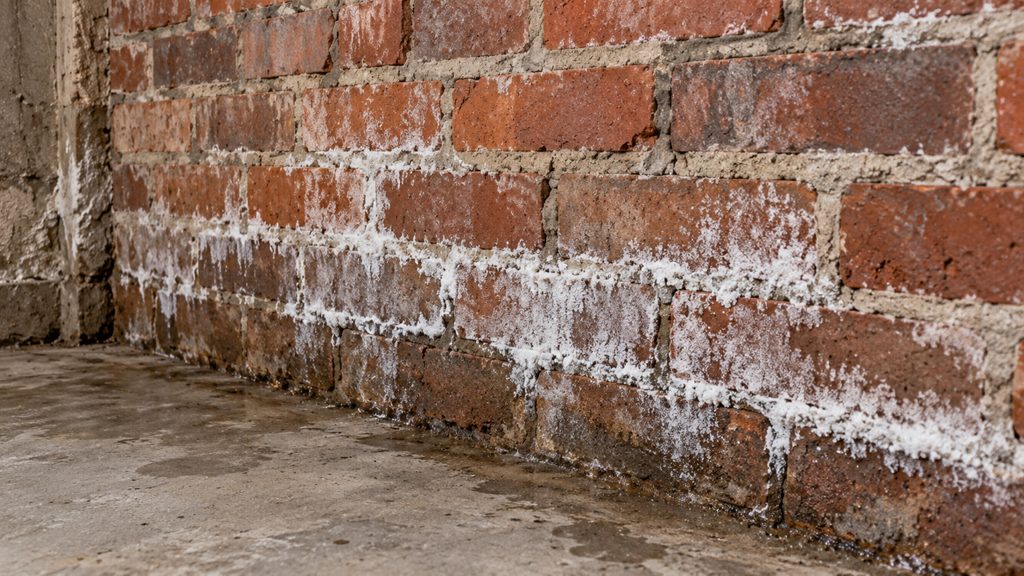
White, chalky crust on a foundation wall is efflorescence, the mineral salt that water leaves behind when it evaporates out of masonry. Efflorescence calls for no mold work, and it makes useful evidence, because it marks where water is coming through.
Black spots on bare brick are usually staining left by growth that died off long ago.
Brick and concrete give mold nothing to eat. When no wood, drywall or paper touches that wall, a dark stain on bare masonry is old history, and I tell the owner it does not need removal.
The water behind either stain still needs fixing, and the stain shows exactly where to look.
What each warning sign usually points to
Match what you are seeing to its likely cause before anyone opens a wall.
| What you notice | Likely cause | First step |
|---|---|---|
| Musty smell in the basement, nothing visible | Humidity held above 55 percent, or growth behind a finished wall | Log humidity for a week, then book an inspection if it stays high |
| Grout at the tub that darkens again soon after cleaning | Water getting past the grout into the wall | Regrout and seal, and have the wall checked if the darkening returns |
| Loose tile around the tub or shower | Wet board behind the tile, often sheetrock | Have the wall checked before anyone retiles it |
| Musty smell when the heat or air conditioning starts | Growth inside the air handler or ducts | Have the air handler opened and inspected |
| Staining or warping on a ceiling below a bathroom | A leak from the tub or shower above | Fix the leak, then check the ceiling cavity for growth |
When checking the common places for mold is worth paying for
Testing earns its place when at least one of these is true:
- A musty smell has no visible source.
- Nobody can pin down where the moisture comes from.
- You suspect growth inside a wall or the HVAC system.
- An insurer, landlord or attorney needs documentation.
Testing pads the invoice when the growth is visible, you know where the leak is, and the material obviously has to come out. The EPA’s guidance on mold testing agrees: when growth is visible, sampling is unnecessary in most cases.
If a smell is what sent you looking, our guide to identifying mold by its odor covers what to check first.
The full list of what our mold inspection and testing includes is on the service page. Tax may apply, and separate reports, difficult access, multiple visits, large commercial properties and after-hours appointments cost extra.
| Situation | What the visit covers | Cost |
|---|---|---|
| Musty basement, nothing visible | Moisture mapping, thermal imaging when useful, the first air sample, an outdoor control sample when appropriate, and a written report | $389 to $429, depending on distance and travel time |
| A second area to compare, such as the HVAC system | Everything above, plus a second sample | $389 to $429, plus $95 for the added sample |
| Visible growth and a known leak | Moisture mapping and a remediation outline, with no samples unless they would change the plan | $389 to $429 |
| Results needed within 24 hours | Rush lab service in place of the standard 2 to 3 business days | $75 per sample, on top of the inspection |
| Several units in one building | Often priced per unit | Starting at the residential rate |
If a Prime Aire assessment calls for remediation on your New York property, a different contractor does that work. Prime Aire Mold Services holds both state mold licenses and takes one role per project, because Article 32 bars doing both on the same job to prevent a conflict of interest.
Questions people ask about mold around the house
How much does it cost to check my basement, bathroom and HVAC for mold?
A residential inspection runs $389 to $429, depending on distance and travel time. The first sample, moisture mapping and a written report are included, and each additional sample is $95. Tax may apply, and separate reports, difficult access, extra visits or after-hours appointments cost more.
How long after a leak does mold start growing?
Mold can start growing about 24 hours after a leak, once drywall, wood or paper stays wet. Humidity is slower: in the basements I inspect, growth starts after three or four days above 55 percent. The EPA says to dry water-damaged areas within 24 to 48 hours.
Do I need a mold inspection for white powder on my basement wall?
Usually not, because white powder on brick or block is efflorescence, mineral salt left behind as water evaporates out of the masonry. It shows where water gets in, so fix that. Book an inspection if wood, drywall or paper touches the wall, or the basement smells musty.
Is mold in my basement dangerous if nobody goes down there?
It still matters, because the growth keeps feeding on wood, drywall and stored paper as long as the humidity holds, and an HVAC return in the basement pulls that air upstairs. Health effects vary by person, and New York State’s Department of Health advises taking those questions to your doctor.
What are the common places for mold in an older Bronx apartment?
In an older Bronx apartment, start at the tub: the backsplash that takes shower water and the joint where the tile meets the tub. In buildings past 30 to 40 years old, I expect some growth there, because unsealed grout has absorbed water for decades. The state health department also flags surfaces around air conditioners.
Can I clean mold behind my shower tile myself?
You can clean surface growth on tile and grout yourself. Once it reaches the board behind the tile, cleaning stops working, because sheetrock holds mold in its paper face and core. The fix is opening the wall, removing the wet board and drying the cavity before new tile goes on cement board.
Who you’re getting this from
Prime Aire Mold Services holds New York State Mold Assessor Contractor License 26-6AY5I-SHMO and Mold Remediation Contractor License 26-6AXK6-SHMO, and has completed more than 8,000 mold assessments over 20 years.
Find out which of these spots is yours
Call Prime Aire Mold Services at (877) 307-5166 to schedule an inspection, or request a free quote for your property. We answer 24/7 and work across New York City (Manhattan, Brooklyn, Queens, the Bronx and Staten Island), Westchester, Nassau and Rockland counties, and New Jersey.