Short answer: In a New York City residential rental, the landlord is the one who pays for mold remediation, and a bathroom job runs $2,200 to $7,800 on my jobs. That holds even when the tenant’s showers helped cause it. Building owners pay from their own funds, and condo owners renting out a unit usually file with insurance. Commercial leases differ.
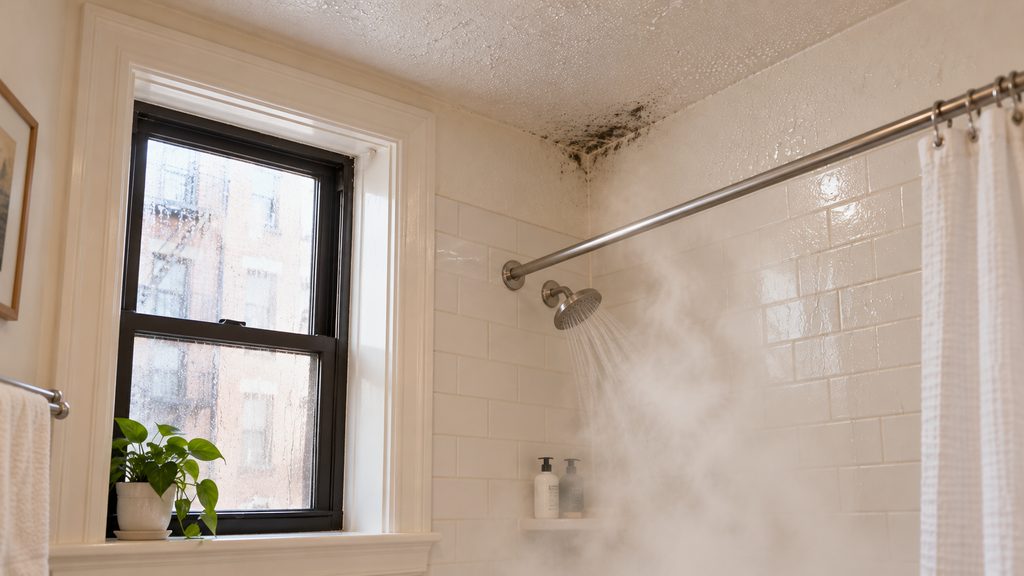
The argument I walk into most often happens in a bathroom. According to the landlord, the tenant takes long hot showers, keeps the window shut and leaves wet towels on the floor. The tenant says the bathroom has no fan and never did.
In a prewar building, both of them are usually right. The bill still goes to the landlord.
I work rental jobs from Williamsburg to the Bronx, in prewar walk-ups, 20-year-old buildings with tired facades and new construction. On residential rentals, the owner pays for the remediation every time.
Remediation pricing depends on the building. Call Prime Aire Mold Services at (877) 307-5166 or request a quote for your unit.
Why the landlord pays, even when the tenant helped cause it
In a New York residential rental, the landlord pays for mold remediation because the law puts the repair duty on the owner. The warranty of habitability is part of every residential lease in the state, and no lease clause can waive it.
New York City adds its own rule. As of September 2026, NYC HPD’s guidance on Local Law 55 requires owners of buildings with three or more apartments to keep units free of mold and to safely fix the conditions that cause it, leaks included. Tenants have a part too. HPD asks them to keep the home dry, report leaks and mold to the landlord, and call 311 if the landlord does not act.
On a residential rental, the landlord pays for the mold remediation. Period.
Yury Gershman, Prime Aire Mold Services
Commercial space is where I have seen tenants pay. On storefronts and other commercial spaces, the lease decides who covers repairs. Whether a residential landlord can recover costs from a tenant who caused damage is a question for a lawyer, and the remediation does not wait for that answer.
What mold remediation costs a NYC landlord
On my New York City rental jobs, mold remediation has cost landlords between $2,200 and $7,800, depending on what failed and how much material came out once the wall was open. These ranges come from my own work, not a published price list.
| Rental job | Typical cost on my jobs | Where the water came from |
|---|---|---|
| Bathroom with no exhaust | $2,200 to $7,800 | Shower steam, a closed window and wet materials left in the room |
| Bedroom wall behind a facade leak | $3,300 to $5,500 | Failed stucco, facade or roof waterproofing in a newer building |
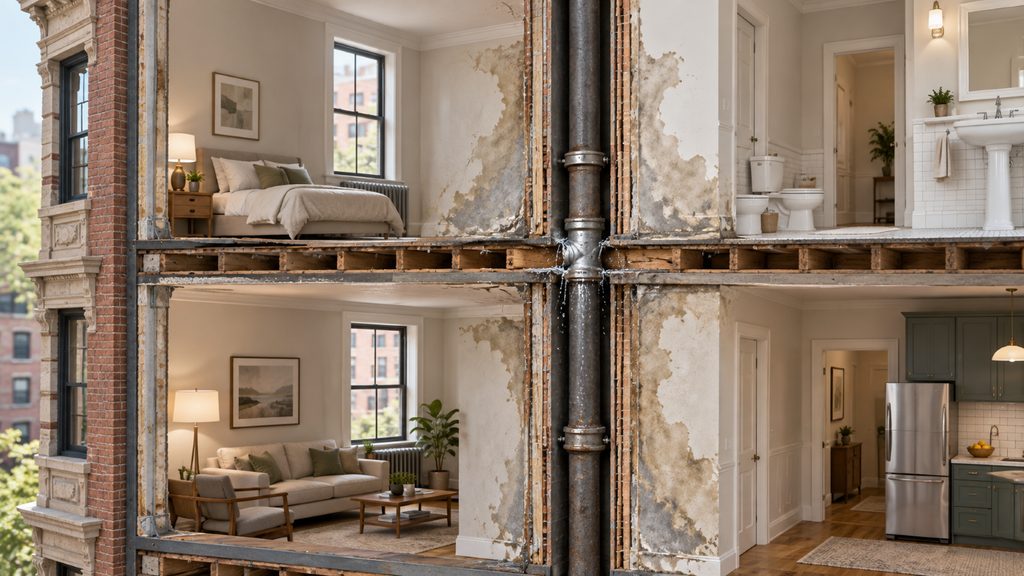
| Riser leak across two stacked units | Around $4,500 | A leaking riser or supply pipe, common in prewar buildings |
| Mildew on tub caulk | No remediation needed | Water sitting where the caulk meets the tile |
Who pays for mold remediation when bathroom habits caused it?
In a residential rental, the landlord pays for bathroom mold remediation even when the tenant’s showers helped cause it. The tenant’s habits decide whether the mold comes back.
The tenant side looks the same in every borough: hot showers with the window closed, wet towels and soggy belongings left in the room, a floor that stays wet for hours. On the building side, most prewar bathrooms have no exhaust ventilation. Adding a fan later is often off the table because of code, limited space and solid concrete walls with no path to the outside.
The EPA’s mold and moisture guide for homeowners and renters comes down to moisture control, so a remediation holds only if the room dries out after every shower. I tell tenants to open the window after showering and keep wet towels and belongings out of the bathroom. Landlords fix whatever the building allows, like a window painted shut or a fan that stopped working.
Who pays for mold remediation when the water comes from another unit?
When water comes from another apartment, a riser or the facade, the landlord of a residential rental still pays for the mold remediation. The source tracks the age of the building.
In prewar buildings I mostly find leaking risers and supply pipes, which wet two or more stacked apartments at once. Buildings 20 to 30 years old and newer construction take water through the facade: badly applied stucco, leaking roofs, waterproofing done with cheap labor and cheap materials.
Who writes the check depends on who owns what. Owners of whole buildings on my jobs pay from their own funds instead of filing on the building’s insurance. An individual owner renting out one apartment files with insurance to cover removing the wet material and the mold, and those claims usually go through.
Either way, the remediation holds only after someone stops the water, and tracing a hidden leak is its own job. For the rooms that fail first, see where mold shows up most in NYC homes.
Why paint and bleach do not end the landlord’s bill
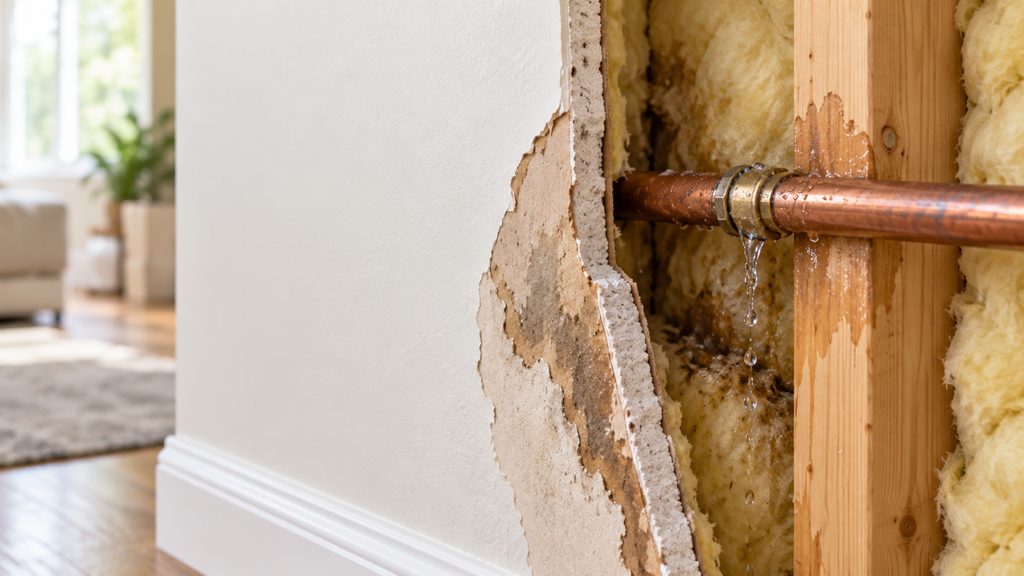
Paint and bleach hide mold without drying the wall or stopping the leak, so the landlord pays for remediation later anyway. After a super has painted over it, I sometimes see nothing when I walk in. The moisture meter still finds wet sheetrock.
That reading tells me two things. The mold will come back, because it grows into the paper backing and gypsum core where paint never reaches. And the leak is still running, because nobody went looking for it.
When the sheetrock is wet, I recommend remediation: remove it, fix the leak, rebuild once the wall is dry. Our breakdown of what a full mold remediation includes walks through each step. HPD’s safe work practices require the same leak repair and the removal of materials that cannot be cleaned. If a reinspection finds the mold back, HPD upgrades the violation, so the paint job buys the landlord a second round of work and a worse violation.
When you do not need mold remediation at all
Mildew on the caulk where a tub meets the tile does not need mold remediation. One rental job I remember had dark growth along that caulk line and nowhere else. The fix was a repair: cut out the old caulk, regrout if the grout has failed, and recaulk so water stays out of the tile.
Once moisture gets behind the tile and mold grows inside the wall, remediation is warranted.
| What you see | Likely source | What it needs |
|---|---|---|
| Mildew along the tub caulk line | Water sitting on failed caulk | Recaulk and regrout, no remediation |
| Loose tile or mold growing behind the tile | Water getting into the wall behind the tub or shower | Mold remediation and a tile repair |
| Mold on the bathroom ceiling and upper walls | Shower steam in a room with no exhaust | Remediation, plus habits that dry the room after showers |
| Damp exterior wall after rain in a newer building | Facade, stucco or roof failure | Facade repair first, then remediation |
What New York law requires of rental owners
New York City owners answer to Local Laws 55 and 61 on top of the statewide rules, and the requirements change with building size.
| Rule | Who it covers | What the owner has to do |
|---|---|---|
| Local Law 55 | NYC buildings with 3 or more apartments | Inspect every unit each year, fix mold and the leak behind it with safe work practices, and clear mold before a new tenant moves in |
| Local Law 61 | NYC buildings with 10 or more units and more than 10 square feet of mold | Hire a licensed assessor and a separate licensed remediator, both of whom file with DEP. DEP penalties run $800 to $10,000. |
| Article 32 | Hired mold projects over 10 square feet anywhere in New York State | A licensed assessor writes the plan and a different licensed contractor does the work |
| Westchester, Nassau and Rockland | Rentals outside New York City | Article 32 applies to hired work. NYC Local Laws 55 and 61 do not. |
| New Jersey | New Jersey rentals | No state mold license exists, so ask which credentials the contractor chose to earn |
Local Law 61 is the one that changes who does the work. HPD requires the assessor and the remediator to be completely independent of each other, and Article 32 draws the same line statewide. Prime Aire Mold Services holds both the New York State mold assessment license and the mold remediation license, and uses each on separate projects. On any one New York property we take one role only, because Article 32 does not allow both and that conflict of interest is the reason the law exists.
If a landlord and tenant dispute is headed to court, the paperwork matters as much as the work. Our page on mold documentation for legal disputes covers what holds up.
Questions landlords and tenants ask about rental mold
Who pays for mold remediation in a commercial storefront?
The lease decides, and on commercial storefront jobs I have seen the tenant pay. A commercial lease can assign repairs to the tenant in ways a residential lease cannot, because New York’s warranty of habitability protects residential tenants. Read the repair clauses before anyone hires a contractor.
How much does bathroom mold remediation cost in a NYC apartment?
On my rental jobs, bathroom mold remediation runs $2,200 to $7,800, and the landlord pays it. The spread comes down to how much material has to come out once the wall is open. Mildew on the tub caulk needs a caulk and grout repair instead, which costs far less.
How long does a NYC landlord have to fix mold after an HPD violation?
HPD gives 90 days for a Class A violation (under 10 square feet in a room), 30 days for Class B (10 to 29 square feet) and 21 days for Class C (30 square feet or more). If a reinspection finds the mold still there, HPD upgrades the violation to the next class.
Do I need mold remediation for mildew on my tub caulk?
Mildew on tub caulk does not need mold remediation. Cut out the old caulk, regrout if the grout has failed and recaulk so water stays out of the tile. Remediation comes in when moisture has gotten behind the tile and mold is growing inside the wall.
Is the mold in my apartment bad for my health?
Indoor mold is linked to breathing symptoms in some people. The CDC cites a 2004 Institute of Medicine review connecting it to upper respiratory symptoms, cough, wheeze and asthma symptoms in people with asthma. Color is not a reliable sign of risk. HPD notes a doctor can request a free home environmental inspection for a tenant with asthma.
Can the super in my Bronx building fix the mold himself?
In a Bronx building with fewer than 10 units, yes, if the work follows HPD’s safe work practices and fixes the leak. With 10 or more units, the super can handle 10 square feet or less, and anything larger needs a licensed assessor and a separate licensed remediator. Paint over wet sheetrock satisfies neither rule.
Who you’re getting this from
I’m Yury Gershman. I have spent 20 years on site in New York buildings, and most of my rental calls come from landlords and property managers. The work runs from prewar walk-ups with failing risers to newer buildings with facade leaks, from Williamsburg to the Bronx. On a rental, my job is to find the water, because the source decides whether the fix holds and whether anyone pays for it twice.
Prime Aire Mold Services holds New York State Mold Assessor Contractor License 26-6AY5I-SHMO and Mold Remediation Contractor License 26-6AXK6-SHMO, and has completed more than 8,000 mold assessments over 20 years.
Get a number for your building
Mold coming back through the paint, a bathroom nobody agrees on, a stain under another apartment: tell us what you are seeing, and we will tell you whether it is a remediation job, a plumbing job or a caulk job. Call Prime Aire Mold Services at (877) 307-5166 for a free quote. We answer 24/7 across Manhattan, Brooklyn, Queens, the Bronx, Staten Island, Westchester, Nassau and Rockland counties, and New Jersey.