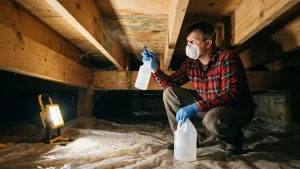
Wondering how long does mold testing take? It usually takes one to five days from the inspector’s visit to your final report. The on-site inspection and sample collection take about one to two hours, and lab analysis adds one to five business days, depending on the lab and the type of test ordered. You can stay in the home during testing.
Most of that window has nothing to do with the inspector; it’s lab processing time. After 20+ years and more than 8,000 completed inspections across NYC and New Jersey, Prime Aire Mold Services typically returns full lab results in 48 to 72 hours (on the faster end of the industry range) through established relationships with accredited local labs.
How Long Does Mold Testing Take? Step-by-Step Timeline
| Step | What Happens | Typical Time |
| 1. Scheduling | Book with a certified inspector; share address, square footage, and known water damage | Same day to 72 hours out |
| 2. Visual inspection | Inspector checks moisture-prone areas using moisture meters, hygrometers, and infrared thermal imaging | 15–30 minutes |
| 3. Sample collection | Air and surface samples are collected, plus an outdoor baseline sample for comparison | 30–60 minutes |
| 4. Lab analysis | Certified lab technicians identify mold species and spore concentrations under microscopy | 24–72 hours standard |
| 5. Report delivery | Inspector compiles lab findings into a written report with recommendations | 48–72 hours (Prime Aire average) |
No responsible inspector hands you results on-site. Lab analysis is what turns a visual inspection into an actual finding, which is why the honest answer always includes lab turnaround, not just the appointment itself.
Add it up and most jobs land at one to five days total: same-week for scheduling, under two hours for the on-site work, and the rest riding on the lab. In dense markets like NYC, appointment availability can be the biggest variable in step one; post-storm seasons and pipe-burst weeks tend to book up faster than a quiet week in spring.
What Affects How Long Mold Testing Takes
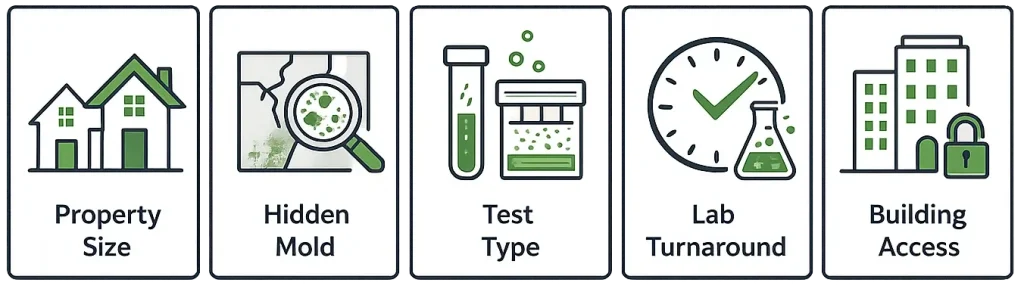
A few real-world factors move the timeline in either direction:
- Property size: A single bathroom takes far fewer samples than a full basement, attic, and multiple bathrooms; fewer samples means faster processing.
- Hidden vs. visible mold: Confirming hidden mold growing behind walls or under flooring often means borescope work and extra samples, which adds time to steps 2 and 3.
- Type of test: Standard air and surface sampling is fastest. DNA-based tests that identify mold from dust samples take longer to process.
- Lab turnaround option: Standard processing runs 24–72 hours; rush processing can return results faster for an added fee.
- Building access: Multi-unit buildings, commercial properties, or locked crawlspaces add coordination time before sampling can even begin.
Learn more about mold inspection and testing costs here.
Buying a Home? Mold Testing and Your Inspection Deadline
Most real estate contracts give buyers a 7- to 10-day inspection contingency window to complete inspections and decide whether to move forward, request repairs, or walk away. A standard home inspection often doesn’t include mold-specific testing, so if you want it, you typically need to book it separately, and early in that window.
With an average turnaround of 48 to 72 hours, Prime Aire’s process comfortably fits inside a standard contingency period, even accounting for scheduling. And a positive result isn’t automatically a dealbreaker: buyers commonly use the report to negotiate seller-funded remediation or a price credit rather than terminating the contract outright.
The key is booking testing as soon as the contingency clock starts, not midway through it.
Do You Actually Need Mold Testing First?
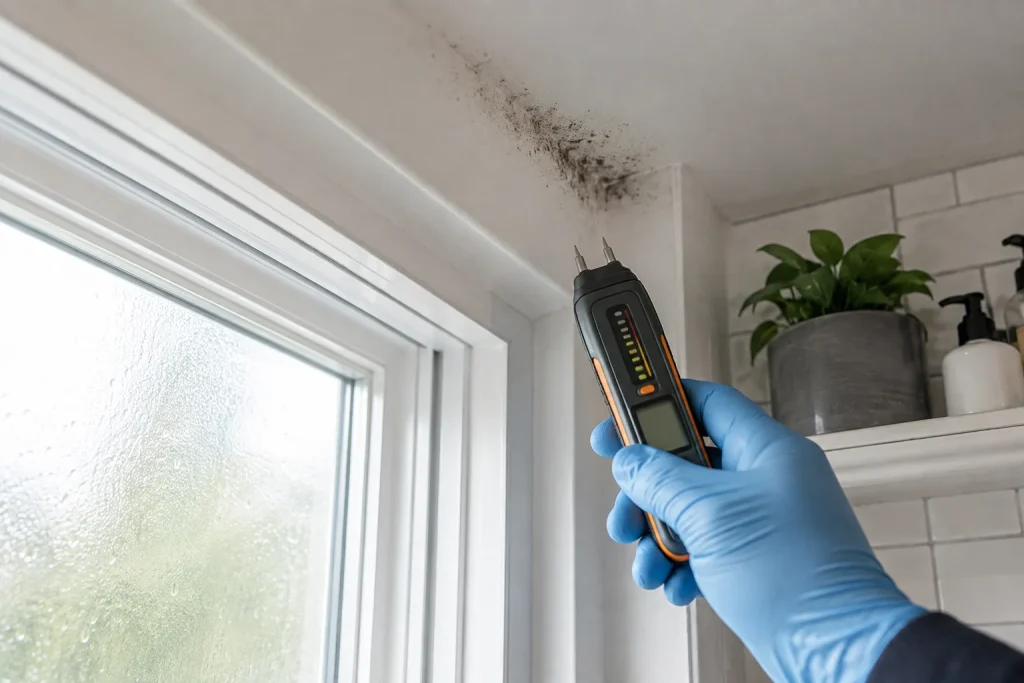
Here’s the caveat worth knowing before you book anything: according to the EPA, if you can already see mold growing, sampling usually isn’t necessary; the money is better spent on mold remediation itself.
Testing earns its cost in specific situations: when mold is suspected but not visible, when you need documentation for insurance or a real estate transaction, or as clearance testing after remediation is complete to confirm the job worked. Across Prime Aire’s completed projects, 95% pass clearance testing on the first attempt; a proprietary benchmark you won’t find anywhere else, and one worth asking any inspector you’re considering to match.
Prolonged mold exposure can lead to ongoing breathing difficulties, more frequent asthma flare-ups, recurring sinus infections, and worsened allergy symptoms. With extended exposure, some people also report lasting tiredness, skin irritation, and trouble concentrating or thinking clearly.
It has also been linked to increased depression, anxiety, and stress in both children and adults, according to the National Institute of Environmental Health Sciences. One more reason not to let a suspected problem sit unaddressed while you weigh whether testing is worth it.
How to Prepare Before the Inspector Arrives
Preparation affects accuracy as much as it affects speed:
- Don’t clean or bleach suspected mold areas beforehand; it can produce a false-negative result.
- Keep windows and doors closed for at least four hours before air sampling; airing out the space artificially lowers spore counts and can mask a real problem.
- Write down any known leaks, flooding, or plumbing failures, and note any symptoms household members have experienced.
- Unlock crawlspaces and basements, and clear furniture away from suspect walls.
- Have your HVAC filter history handy; inspectors often check air handling units and ductwork, and knowing when filters were last changed gives them useful context.
Don’t Wait Till Things Get Worse, Schedule Mold Testing Today
A clean report may still come with a recommendation to monitor conditions, especially if the moisture source hasn’t been fixed. If mold is confirmed, your inspector will scope a mold remediation plan sized to the affected area. Per EPA guidance, professional remediation (not DIY cleanup) is recommended once visible mold covers more than 10 square feet, roughly a 3-by-3-foot patch.
Learn more about how long mold remediation takes here.
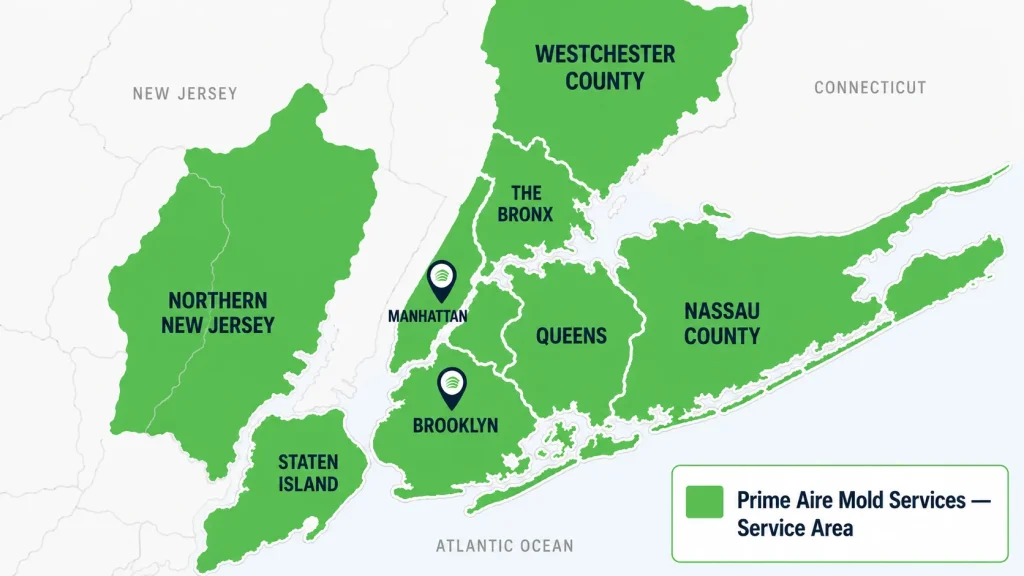
Ready to get answers? Prime Aire Mold Services offers mold testing services across NYC, Westchester, Nassau County, and Northern New Jersey. We are IICRC-certified, EPA-licensed inspectors and offer quick lab turnaround built to keep the timeline as short as it can honestly be.