TLDR: Yes, mold does have a smell; a persistent, musty, earthy odor caused by microbial volatile organic compounds (mVOCs). You can often detect mold by smell before you ever see it.
This guide explains what mold smells like, how different species vary, how to tell mold odor apart from other household smells, what smell intensity signals about severity, and when to call a professional.
Does Mold Have a Smell?
Yes mold has a smell and it’s one of the earliest warning signs homeowners can detect often before anyone can see a trace of mold. Before understanding why mold smells, it helps to know what mold actually is. Mold is a type of fungus that grows in damp, organic-rich environments and reproduces by releasing microscopic spores into the air.
The most common mold smell is musty, damp, and earthy; similar to wet cardboard, old books, or a damp basement that’s been shut up for weeks. Think of it as the smell of a forgotten wet towel embedded into walls, floors, or ceilings.
Mold produces this odor as it metabolizes organic material, releasing gases called microbial volatile organic compounds, or mVOCs. The EPA confirms these compounds are typically the source of the “moldy” odor people associate with growth.
Prime Aire’s inspectors use state-of-the-art equipment to detect mVOC signatures even when that odor is too faint for the human nose to reliably identify.
What Kinds Of Smells Can Mold Have?
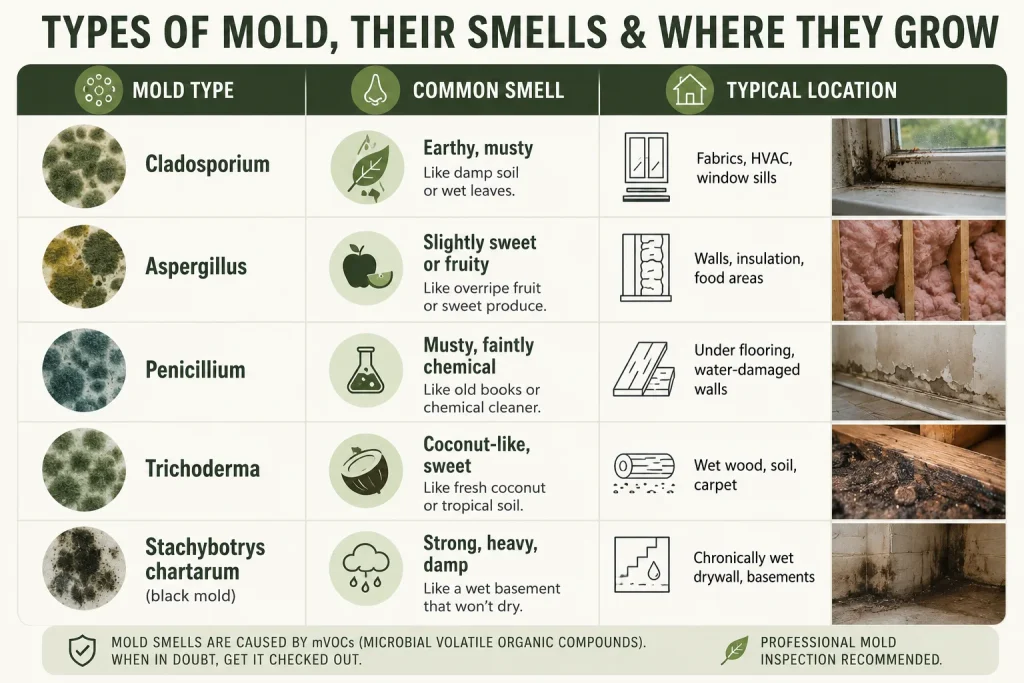
Here’s are different types of mold smells depending on the mold:
| Mold Type | Common Smell | Typical Location |
| Cladosporium | Earthy, musty | Fabrics, HVAC, window sills |
| Aspergillus | Slightly sweet or fruity | Walls, insulation, food areas |
| Penicillium | Musty, faintly chemical | Under flooring, water-damaged walls |
| Trichoderma | Coconut-like, sweet | Wet wood, soil, carpet |
| Stachybotrys chartarum (black mold) | Strong, heavy, damp | Chronically wet drywall, basements |
Many ask “Can you detect black mold by its smell alone?” The answer is sometimes because its odor is distinctive. Prime Aire’s IICRC-certified inspectors use fiber optic borescopes and air sampling to confirm species identity beyond what odor alone can reveal.
Mildew vs. Mold Smell
Mildew and mold are both fungi, but mildew stays on the surface while mold grows into and through what it’s on. That difference shows up in the smell: mildew is milder and sourer, like a wet sponge, while mold is heavier and more persistent, like wet cardboard or a stale basement, and it lingers even after you air out the room.
Is That Smell Actually Mold? How to Tell the Difference
Not every musty smell means mold. Knowing how to recognize mold smells versus other household odors saves unnecessary panic and helps you identify the real problem faster.
Use this decision framework:
- Musty + humid room + visible moisture staining → Likely mold growth
- Musty smell comes from vents or HVAC → Possibly dirty ducts, not necessarily mold
- Musty + sulfur near drains → Possibly sewer gas
- Strong decay odor, localized to one wall → Possibly a dead animal, not mold
- Persistent earthy smell that intensifies with heat or humidity → Mold smell, investigate further
Federal health and environmental authorities, including the EPA and the CDC, report that nearly half of U.S. homes and buildings, around 47%, have experienced dampness or mold at some point.
What we can say directly from our own caseload: across Prime Aire’s 8,000+ completed inspections in NYC Metro and Northern NJ, hidden mold growth behind walls or under flooring is a routine finding, often turning up well before a homeowner notices any odor at all.
How Strong Is the Smell and How Worried Should You Be?
Smell intensity is a useful proxy for mold severity. Here’s a simple scale:
- Faint or occasional mustiness: Early-stage or surface mold, small colony. Monitor humidity, check for moisture sources, ventilate.
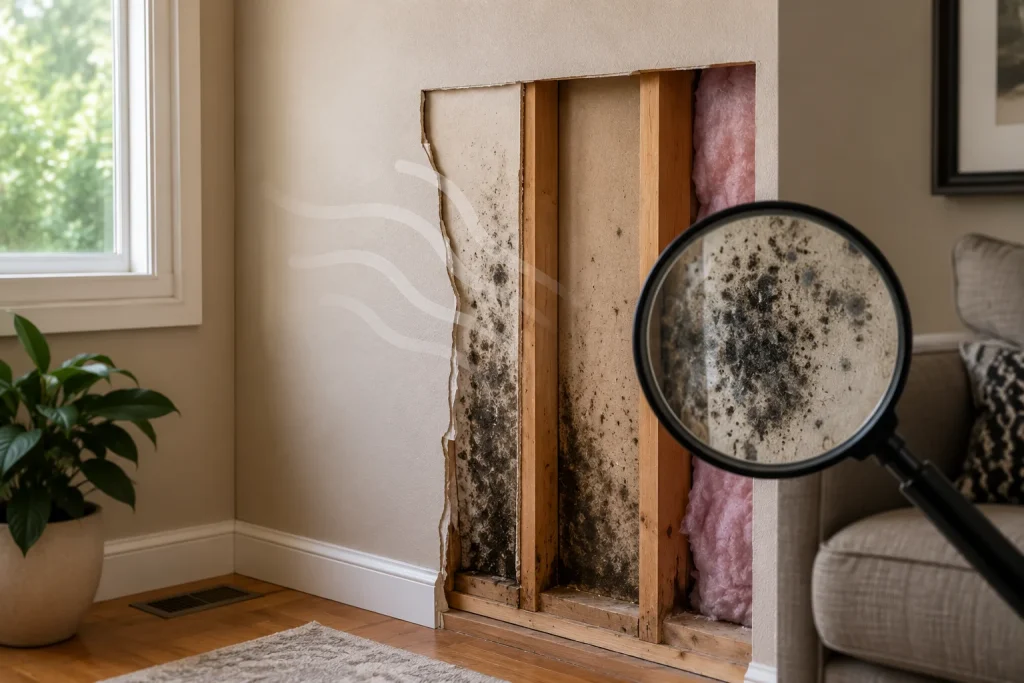
- Moderate and consistent mold smell Established growth, possibly hidden behind walls or under flooring. Warrants active investigation.
- Strong, room-wide, overwhelming odor: Significant colonization. Seek professional mold assessment immediately.
Timing matters too. Standard moisture-drying guidance calls for drying materials within 24–48 hours to prevent mold from taking hold. Mold can begin producing detectable mVOCs within roughly that same window after a leak or flood. Act fast after water damage.
Seasonality also plays a role: mold smells worse in summer because heat and humidity amplify mVOC production. You may barely notice an odor in dry January air, then find it overwhelming in July; same mold, different conditions.
Prime Aire’s IICRC-certified inspectors use thermal imaging and laser particle counters to confirm what smell intensity alone can only suggest.
When to Stop Sniffing and Call a Professional
Knowing how to recognize mold smells in your home is useful, but professional mold air and surface sampling removes the guesswork. The human nose has real limits, especially when mold is concealed inside walls or HVAC systems. Worse, repeated long-term exposure dulls your sensitivity, you may genuinely stop noticing a smell that’s still present and active.
Call a professional when:
- You notice a persistent mold smell but can’t find visible growth
- The smell returns after DIY cleaning
- Household members experience unexplained respiratory symptoms, headaches, or fatigue
- The odor covers a large area or multiple rooms
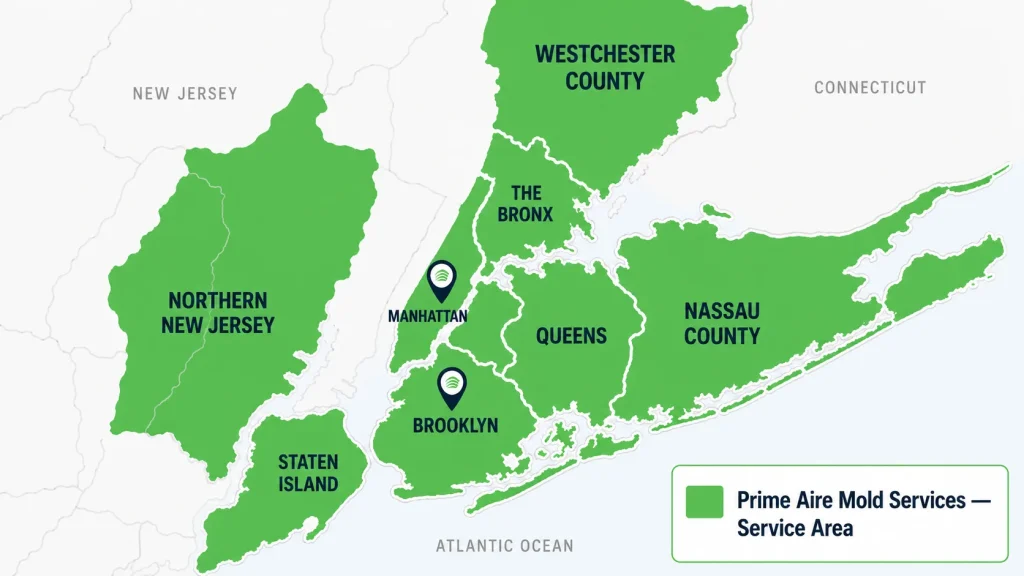
Prime Aire Mold Services holds IICRC and EPA credentials and has completed 8,000+ inspections across NYC Metro and Northern NJ using non-invasive equipment including thermal imaging, laser particle counters, and fiber optic borescopes, to locate hidden mold no nose can find.
To get a professional read on what your nose is picking up contact Prime Aire Mold Services today. Science beats the nose when the problem is hidden.
FAQs about Mold Smells
Here are answers to frequently asked questions about mold odors.
What Does Mold Smell Like?
Musty, damp, and earthy; like wet cardboard or a stale basement.
What Does Mildew Smell Like?
Milder and sourer than mold, like a wet sponge.
Can You Detect Black Mold By Its Smell?
Sometimes, but not reliably, testing is needed to confirm.
Is It Bad To Sleep In A Room That Smells Like Mold?
Yes, prolonged exposure can trigger respiratory and allergy symptoms.
How Do You Tell If Mold Is Making You Sick?
Symptoms improve when you leave the space and return when you’re back in it.
What Smell Can Be Mistaken For Mold?
Dirty HVAC ducts, sewer gas, or a dead animal in a wall.