Mold After Water Damage in New York City: 48-Hour Emergency Guide
Learn how quickly mold grows after water damage in New York City, what steps to take within 48 hours, and when to call a professional mold remediation company.
Water damage can turn into a major mold problem in as little as 24 to 48 hours — especially in New York City apartments, brownstones, basements, and commercial buildings where moisture can become trapped behind walls, under flooring, and inside ceilings.
Whether the damage comes from a burst pipe, roof leak, overflowing sink, appliance failure, or flooding, acting quickly is critical. The longer moisture sits, the higher the risk of mold growth, structural damage, indoor air quality issues, and costly insurance claims.
This emergency guide explains what NYC property owners should do within the first 48 hours after water damage and when professional mold remediation becomes necessary.
Why Mold Grows So Fast After Water Damage
Mold thrives in damp, humid environments. Once water enters drywall, insulation, wood flooring, carpeting, or subfloors, mold spores already present in the air can begin growing rapidly.
In New York City, mold growth often accelerates because of:
- Older building materials
- Poor ventilation
- High indoor humidity
- Hidden moisture behind walls
- Delayed drying in apartments and multi-family buildings
Many homeowners are surprised to learn that even a “small leak” can lead to widespread contamination if moisture is not properly removed.
The First 24 to 48 Hours Are Critical
The first two days after water damage are the most important. Immediate action can significantly reduce mold growth and prevent expensive demolition later https://dol.ny.gov/system/files/documents/2021/03/p227.pdf
Step 1: Stop the Source of Water
Before cleanup begins, identify and stop the water source. Common causes include:
- Burst pipes
- HVAC leaks
- Roof leaks
- Appliance failures
- Overflowing toilets or sinks
- Storm and flood intrusion
If the source is not corrected, mold will continue returning even after cleanup.
Step 2: Begin Emergency Water Extraction
Standing water should be removed immediately using professional extraction equipment.
Fast water removal helps:
- Prevent mold growth
- Protect flooring and drywall
- Reduce structural damage
- Lower insurance claim costs
Professional water damage restoration companies use:
- Commercial extractors
- Air movers
- Dehumidifiers
- Moisture detection equipment
DIY drying is often not enough because moisture can remain hidden beneath floors and inside wall cavities.
Step 3: Remove Wet Materials
Porous materials that remain wet for too long may need removal, including:
- Drywall
- Insulation
- Carpet padding
- Wood flooring
- Ceiling materials
- Baseboards
In many NYC properties, water spreads farther than visible staining suggests. Moisture inspections help determine the true extent of the damage.
Signs Mold Is Developing After Water Damage
Mold is not always immediately visible. Property owners should watch for:
Musty Odors
A persistent earthy smell is one of the earliest warning signs.
Discoloration on Walls or Ceilings
Dark spots, staining, or yellowing may indicate hidden moisture and microbial growth.
Peeling Paint or Bubbling Drywall
Excess moisture trapped behind surfaces often causes visible deterioration.
Increased Allergy Symptoms
Exposure to mold can contribute to coughing, sneezing, headaches, throat irritation, and poor indoor air quality.
Why Professional Moisture Inspections Matter
One of the biggest mistakes after water damage is assuming the area is dry because surfaces feel dry to the touch.
Professional moisture inspections use:
- Thermal imaging cameras
- Moisture meters
- Hygrometers
- Infrared detection tools
These inspections help locate hidden moisture behind walls, under flooring, and inside ceilings before mold spreads further.

Mold Remediation vs. Mold Removal
Many people use the terms interchangeably, but professional mold remediation involves more than simply spraying or wiping surfaces.
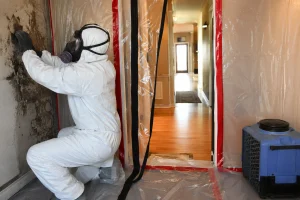
A proper mold remediation process may include:
- Containment barriers
- HEPA air filtration
- Negative air machines
- Safe removal of contaminated materials
- Antimicrobial treatment
- HEPA vacuuming
- Structural drying
- Post-remediation cleaning
The goal is not only removing visible mold but also addressing the underlying moisture problem.
Insurance Claims for Water Damage and Mold in NYC
Insurance coverage for mold depends heavily on the source of the water damage and how quickly the issue was addressed.
Insurance companies often require:
- Moisture readings
- Photographic documentation
- Detailed estimates
- Drying logs
- Remediation reports
Working with a company experienced in insurance claim documentation can help streamline the claims process and reduce disputes.
Common Areas Where Mold Develops in NYC Buildings
In New York City properties, mold commonly develops in:
- Bathroom ceilings
- Basement walls
- Behind kitchen cabinets
- Around HVAC systems
- Beneath wood flooring
- Inside crawl spaces
- Around windows and exterior walls
Multi-unit buildings can also experience hidden moisture migration between apartments.
When to Call a Mold Remediation Professional
You should contact a professional immediately if:
- Water has been present for more than 24 hours
- There is visible mold growth
- You smell musty odors
- Drywall or flooring is swollen
- The affected area is large
- Sewage or contaminated water is involved
- You need documentation for an insurance claim
Quick action can significantly reduce restoration costs and limit long-term damage.
Emergency Mold and Water Damage Services in New York City
If your property experiences water damage, time matters. Fast emergency response can help prevent mold growth, protect indoor air quality, and reduce costly structural repairs.
Professional mold remediation and water damage restoration services in NYC typically include:
- Emergency water extraction
- Structural drying
- Mold remediation
- Moisture inspections
- HEPA air filtration
- Insurance claim documentation
- Post-remediation cleanup
The sooner the drying and remediation process begins, the better the outcome for your property.
Final Thoughts
Mold after water damage is one of the most common and costly problems facing New York City property owners. Because mold can begin growing within 24 to 48 hours, immediate action is essential.
Proper water extraction, drying, moisture inspection, and professional mold remediation can help protect your home, building, or investment property from larger structural and health-related issues.
If you suspect hidden moisture or mold growth after water damage, scheduling a professional inspection as soon as possible can prevent the problem from spreading further.