Can mold die on its own? No. When a damp area dries out, mold goes dormant and stops growing, but it stays viable and can start growing again when moisture returns. The EPA also notes that dead mold can still cause allergic reactions in some people, so you have to physically remove mold, not just dry it out or kill it.
Key takeaways
- Mold does not die on its own. When an area dries out, mold goes dormant and can start growing again once moisture returns.
- The EPA says dead mold can still cause allergic reactions in some people, so mold has to be physically removed, not just dried out or killed.
- Inactive mold often looks lighter in color, chalky, or powdery, and is easy to mistake for dust or an old stain.
- Mold can keep returning for as long as the moisture source stays unresolved, including behind walls, under carpet pads, and inside ductwork.
- Bleach isn’t recommended for routine mold cleanup. You can scrub hard surfaces with detergent and water, but porous materials like carpet and ceiling tiles may need to be thrown away.
- Homeowners can usually handle mold covering less than about 10 square feet. In New York, mold projects over 10 square feet fall under Article 32 and require licensed contractors.
- A clean-looking surface doesn’t prove the mold is gone. Professional mold testing and inspection confirm whether the cleanup worked.
Can Mold Die on Its Own If It Dries Out?
No. Drying a space suspends mold growth. It doesn’t kill the mold.
Visible mold often fades or shrinks after a stretch of dry weather, and better airflow can make a patch look smaller. If you can’t see it anymore, it seems reasonable to assume it’s gone.
The science says otherwise. According to the EPA, some mold spores are always present in indoor air and house dust, and they won’t grow without moisture. Dry conditions pause mold. They don’t remove it. In Prime Aire’s inspections, mold left alone after a leak often shows up in drywall, framing, or insulation by the time the owner calls.
What Does Inactive Mold Look Like?
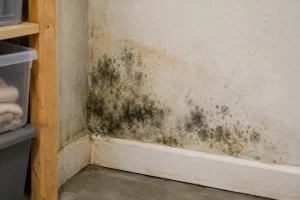
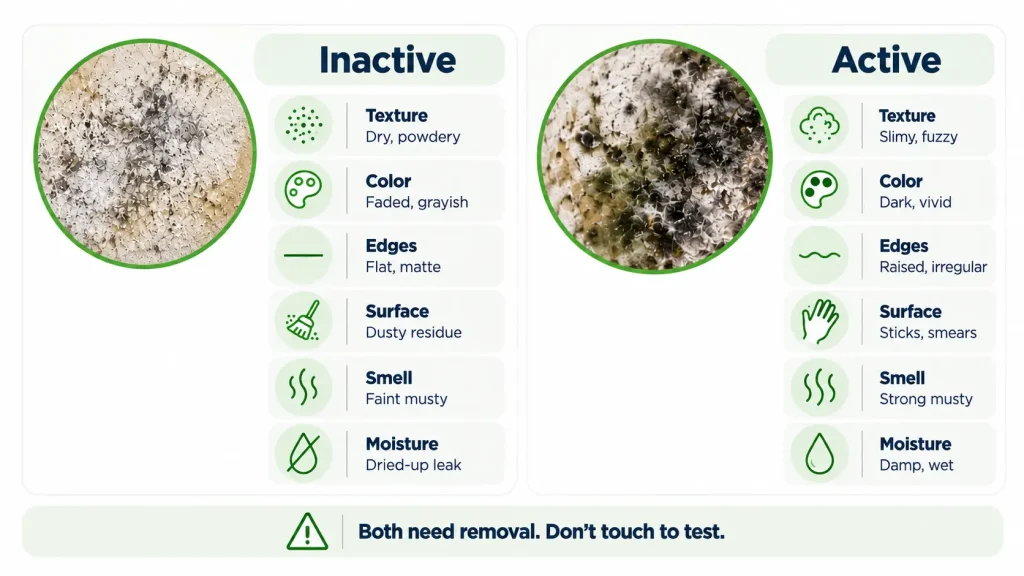
Dormant mold often looks lighter in color and dry, chalky, or powdery. Many people mistake it for dust or an old stain.
- Texture: Feels brittle, flaky, or powdery instead of slimy, velvety, or tacky.
- Color: Muted, faded, or dull shades such as grayish white, dull brown, muted green, or dark black to yellow-black.
- Edges: Lies flat and matte against the surface instead of looking raised or fuzzy with irregular borders.
- Removal: Often brushes or wipes off like dust, while active mold sticks firmly or smears.
- Smell: Has a fainter musty smell than active mold, though some odor can linger.
- Moisture: Usually found where a past leak, condensation, or humidity problem dried up long ago.
The EPA says dead mold can still cause allergic reactions in some people, so it should be removed rather than simply killed. Dormant mold still carries allergens, and disturbing it can send spores into the air. Learn more about the warning signs of mold toxicity in our guide.
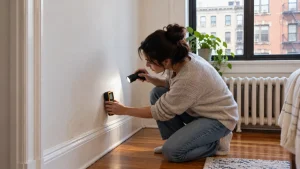
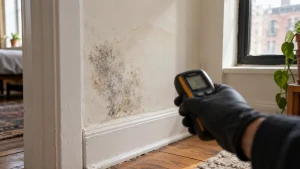
Moisture control is still the right first step. The EPA recommends keeping indoor humidity below 60% (ideally 30% to 50%) and drying water-damaged materials within 24 to 48 hours. That prevents new growth, but it won’t remove an existing colony. Prime Aire uses thermal imaging to spot temperature patterns that point to hidden moisture inside walls and ceilings, even where surfaces feel dry.
How Long Does Mold Last in a House?
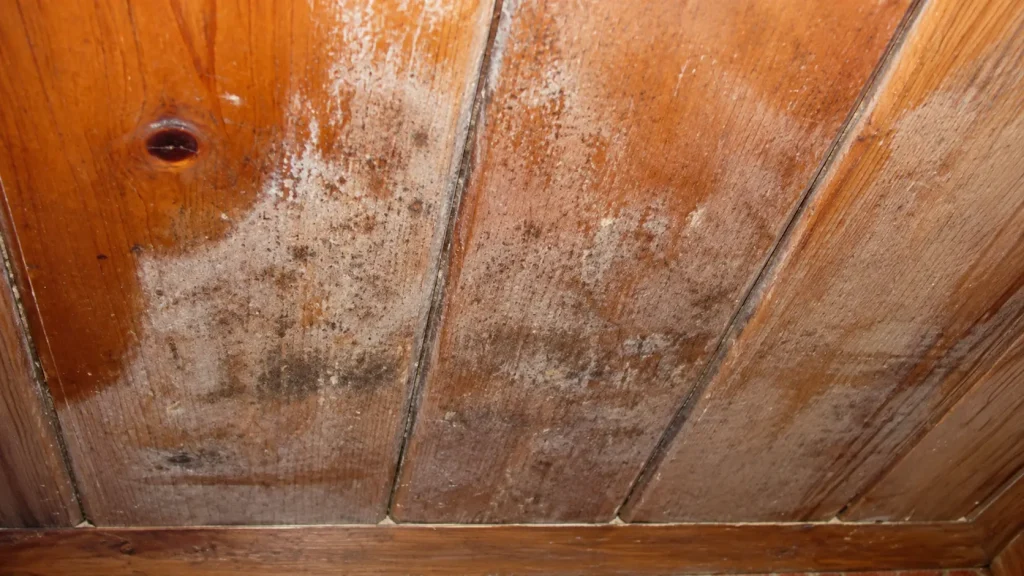
Mold can keep coming back for as long as the moisture problem stays unresolved.
Mold also damages what it grows on. The EPA notes that mold gradually destroys the things it grows on. It can also hide on the back side of drywall, under flooring or carpet pads, above ceiling tiles, and inside ductwork. If mold reaches an HVAC system, the EPA advises against running it until it’s checked, because it can spread spores through the building.
How Do You Tell If You Killed Mold?
You’ve killed mold when:
- The moisture problem is fixed (leak is repaired, materials are dry, and humidity stays below 60%; ideally 30% to 50%)
- There is no visible mold (fuzzy, slimy, or discolored patches) or moldy odor
- The area shows no new growth when you check back
- People can use the space without health complaints (no coughing, wheezing, or irritation)
- A trained professional confirms the area was cleaned properly with surface or air sampling.
Can mold die once a bleach scrub makes the stain disappear? No, and looking at the surface won’t tell you much. This is where many DIY cleanups fall short.
Bleach and store-bought sprays can lighten visible growth on a wall or tile while mold remains in porous materials. The EPA does not recommend using chlorine bleach as part of a routine mold cleanup. Instead, it recommends scrubbing hard surfaces with detergent and water. It also says porous items like ceiling tiles and carpet may need to be thrown away, because mold can fill their crevices and be hard to remove completely.
Size matters too. The EPA says homeowners can usually handle mold covering less than about 10 square feet. Larger areas, heavy water damage, or sewage contamination call for a professional. In New York, contractors licensed under Article 32 must handle mold projects over 10 square feet.
Prime Aire’s own records show what proper removal and verification achieve. Across more than 8,000 completed projects, 95% of jobs pass clearance testing on the first visit.
Get a Clear Answer With a Professional Mold Inspection
Mold doesn’t go away on its own, and drying it out only pauses it. The useful questions are where the moisture is coming from and how far the growth has spread.
Prime Aire Mold Services has more than 20 years of experience and 8,000+ completed projects in the NYC metro area. The team includes IICRC-certified, EPA-licensed technicians and NYS-licensed home inspectors. Inspectors use thermal imaging cameras, laser particle counters, moisture meters, and fiber optic borescopes to find moisture and mold that a visual check can miss.
Within 2 to 3 business days, you get an organized report with infrared photos of your property. It explains:
- Whether mold is present
- How severe the growth is
- The recommended remediation steps
- How to keep mold from coming back
Our work is backed by a 90-day satisfaction warranty.
Call Prime Aire Mold Services before things get worse and more costly.