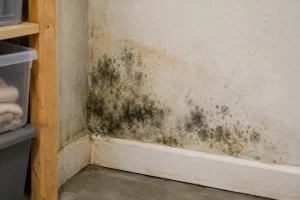
Can black mold cause headaches? It can, but usually indirectly. In sensitive people, black mold and other indoor molds can trigger allergy-like sinus congestion and pressure, and the musty-smelling gases mold releases have been linked to headaches. What the science does not support is the idea that black mold is a uniquely “toxic” mold that poisons the brain.
The CDC says to treat black mold the same as any other mold, and Cleveland Clinic notes that headaches aren’t a typical symptom of a black mold allergy. So if your headaches get worse at home and ease when you’re away, mold is worth ruling out, along with other common causes. This guide covers how mold plays a role, warning signs, a self-check, and next steps.
Key Takeaways
- Black mold can contribute to headaches, but usually indirectly. The most common causes are allergy-type sinus pressure and the musty-smelling gases (MVOCs) that mold releases as it grows.
- Black mold isn’t more dangerous than other molds. The CDC says all molds should be treated the same for health risk and removal.
- “Toxic mold syndrome” isn’t an established diagnosis. Cleveland Clinic says headache, brain fog, and chronic fatigue are not typical symptoms of a black mold allergy, so see a doctor if you have them.
- Timing is the biggest clue. Headaches that worsen at home and ease when you’re away point to your indoor environment.
- Urine mycotoxin tests can’t diagnose mold illness. They aren’t FDA-approved for clinical use, and the CDC doesn’t recommend them.
- Find the moisture, then remove the mold. Keep indoor humidity at 50% or lower, and dry water damage within 24–48 hours.
- Get a professional inspection if you smell mold but can’t see it. A good inspection starts with moisture mapping and a visual check of hidden areas.
How Can Black Mold Cause Headaches?

Health agencies point to two main pathways, plus one that is often overstated.
Sinus and Allergy Pressure
This is the best-documented route. When a sensitive person breathes in mold spores, the immune system can react the way it does to pollen. The CDC lists stuffy nose, sore throat, coughing or wheezing, burning eyes, and skin rash as possible effects. When the nasal passages swell, pressure builds behind the eyes, forehead, and cheeks. That pressure can feel like a sinus headache. People often mistake it for a lingering cold or seasonal allergies.
Musty Odors (mVOCs)
As mold grows, it releases microbial volatile organic compounds (mVOCs). These gases cause the musty smell people associate with mold. The EPA notes that mVOC exposure has been linked to headaches and dizziness, but that the health effects are still largely unknown and more research is needed. A musty smell is also a clue in itself: the EPA says a moldy odor suggests mold is growing and should be investigated.
What About Mycotoxins and “Toxic Mold”?
Claims that mycotoxins cross into the brain aren’t supported for normal household exposure. Cleveland Clinic states there is no clear scientific evidence for a “toxic mold syndrome” diagnosis. That does not mean your symptoms aren’t real. It means the most likely causes are allergy, irritation, and odor, and the fix is the same either way: find the moisture and remove the mold.
Health effects vary from person to person depending on the type of mold, the amount and length of exposure, and the person exposed.
10 Warning Signs That Mold May Be Making You Sick
- Headaches that worsen at home, especially in one room, and ease when you’re away
- Stuffy or runny nose that lingers beyond a normal cold
- Sinus pressure behind the eyes, forehead, or cheeks
- Coughing or wheezing, or asthma symptoms that get worse indoors
- Burning, itchy, or watery eyes
- Sore or scratchy throat
- Skin rash or irritation with no other clear cause
- A musty or earthy smell, even when you can’t see mold
- Visible spots on walls, ceilings, grout, or window frames, in any color
- Recent water damage, such as a leak, pipe burst, or flooding that wasn’t dried within 48 hours
One more clue matters most: timing. If symptoms improve after a few days away and return when you come home, your indoor environment is a likely suspect.
You may see “mold toxicity” lists that include brain fog, memory loss, or chronic fatigue. Cleveland Clinic says those symptoms, along with headache, are not typical of a black mold allergy. If you have them, see a doctor, since many other conditions can cause them. Our page on the health effects of mold covers more.

How to Tell If Your Headache Is From Mold (Not Something Else)
How do I know if my headache is from mold? There is no single test that proves it. Mold headaches can feel like tension headaches, dehydration headaches, or stress-related pain. The CDC states that no test currently proves a link between black mold and specific health symptoms. What you can do is look for patterns.
Use this self-check:
- Location: Do headaches happen mostly at home, or in one room or building?
- Timing: Do they ease on trips away, or get worse after heavy rain or humid weather?
- Other symptoms: Do you also have congestion, itchy eyes, or a cough?
- Home clues: Have you noticed a musty smell, dark spots, or a recent leak?
- Allergy history: Do you have known allergies or asthma that seem worse indoors?
If three or more apply, it makes sense to check your home for moisture and mold, and to share your notes with your doctor.
Many readers also ask how to test yourself for mold toxicity. Some labs sell urine mycotoxin tests, but the CDC reports that these tests are not FDA-approved for clinical use and that no mycotoxin level has been established as predictive of disease. The CDC does not recommend this kind of testing for people living in water-damaged buildings. An allergist can test for a mold allergy with standard skin or blood tests.
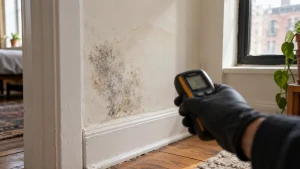
For your home, the better question is: where is the moisture coming from? NIOSH has found that thorough visual inspections and musty odors are more reliable than air sampling alone for finding mold problems. That’s why a professional mold inspection starts with moisture mapping and a visual check of hidden areas.
Why Mold Headaches Are Hard to Pin Down and What to Do Next
Mold symptoms are nonspecific, so they overlap with colds, allergies, and other conditions. People can treat the symptoms for months while the moisture source keeps feeding mold growth. Removing the source is what keeps symptoms from coming back.
If your answer looks like yes, here’s what to do:
- See your doctor. Describe your symptom timeline and mention possible mold exposure. Ask about allergy testing if you have congestion or itchy eyes.
- Check your home. Look and sniff for mold under sinks, around windows, in bathrooms, basements, and closets on outside walls. Note any history of leaks.
- Get a professional inspection if you smell mold but can’t find it. Mold can hide behind walls or under floors after water damage. Here’s how to vet a mold inspector.
- Control humidity. The CDC recommends keeping indoor humidity no higher than 50% all day, using an air conditioner or dehumidifier.
- Dry water damage fast. The CDC advises cleaning up and drying out your home within 24 to 48 hours after a flood. Our 48-hour water damage guide walks through the steps.
Once the moisture is fixed and mold is properly removed, allergy-type symptoms often ease. If they don’t, keep working with your doctor, because another cause may be involved.
A note on testing: the CDC does not recommend routine mold testing because no health-based standards exist for mold levels. We agree that testing is not a health diagnosis. Air and surface samples are most useful for a narrower job: confirming hidden growth when you smell mold but can’t see it, and verifying that an area is clean after remediation.
Suspect Mold Is Behind Your Headaches? Schedule a Professional Inspection
Headaches that worsen indoors and come with congestion or a musty smell deserve a closer look.
Prime Aire Mold Services has spent 20+ years completing 8,000+ projects to help homeowners, renters, and businesses find and fix mold at its source. Our IICRC-certified technicians and licensed home inspectors use non-invasive tools, including infrared thermal imaging cameras, moisture meters, hygrometers, laser particle counters, and fiber optic borescopes, to find moisture where a visual check alone can miss it.
Your report arrives within 2 to 3 business days. It explains whether mold is present, how severe the growth is, recommended remediation steps, and how to prevent it from coming back, with infrared photos of your property. Our 90-day satisfaction warranty backs every inspection, and 95% of our remediation projects pass clearance testing on the first try.
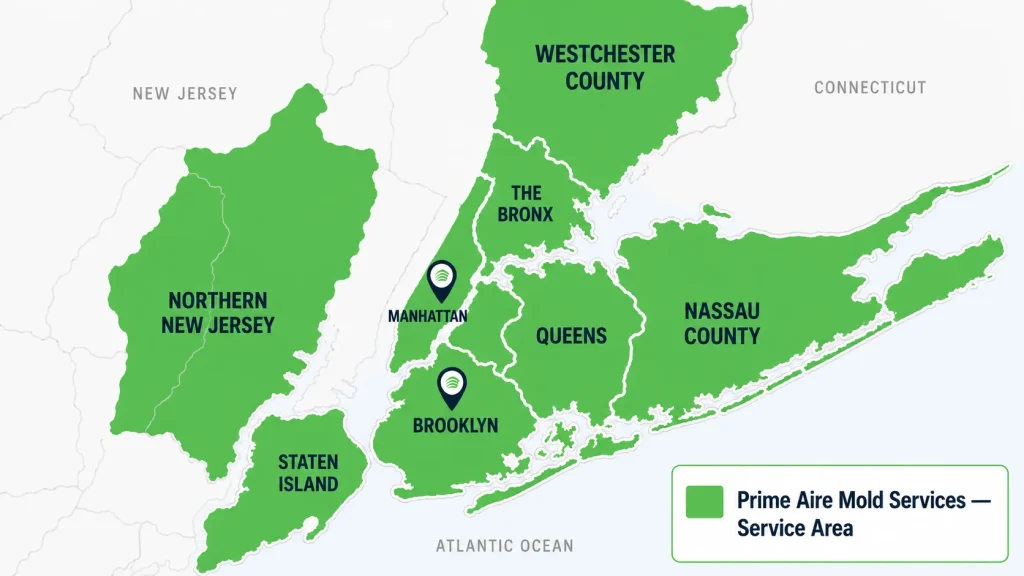
We serve all five boroughs (Manhattan, Brooklyn, Queens, the Bronx, and Staten Island), plus Westchester County, Nassau County, and North New Jersey.
Call Prime Aire to book your mold inspection today. You’ll get clear, documented answers about your indoor air and a plan you can act on.