Most residential mold remediation takes 1-10+ days from start to finish, depending heavily on the size of the affected area, where the mold is located, and whether the underlying moisture source has been addressed.
If you’re wondering how long does mold remediation take in your specific situation, this guide walks you through each stage of the mold remediation process with realistic time estimates so you can plan around the work.
If there is confirmed mold in your home, acting promptly matters. According to the CDC, research shows that people who spend time in damp buildings report health problems, including respiratory symptoms and infections, underscoring the importance of starting mold remediation without delay once contamination is confirmed.
What to Know Before Mold Remediation Begins
This guide gives you a clear, step-by-step understanding of the mold remediation timeline so you can make informed decisions, set realistic expectations, and avoid the planning mistakes that catch most homeowners off guard.
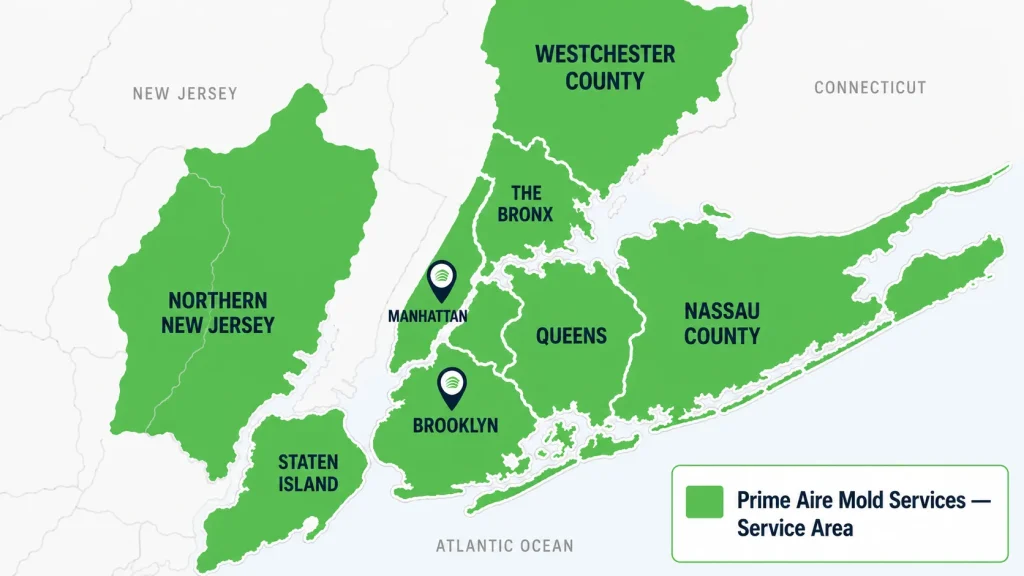
With 20+ years of experience and 8,000+ completed projects across NYC Metro and Northern NJ, we’ve seen every variation of this process, and the steps that follow reflect what that experience consistently shows.
Before you get started, confirm these prerequisites:
- A certified mold inspection has been completed
- You know the approximate square footage of the affected area
- A licensed mold remediation service has assessed the scope
Skipping the inspection step is one of the most common mistakes homeowners make. It leads to an underestimation of the extent of contamination, which affects both the timeline and the budget.
How Long Does Mold Remediation Take? The Step-by-Step Process
The time required for mold remediation can range from a single day to well over a week. Minor, contained growth may be resolved quickly, while larger infestations in structural areas like basements or attics, or more severe damage, can extend the process to 10 days or more.
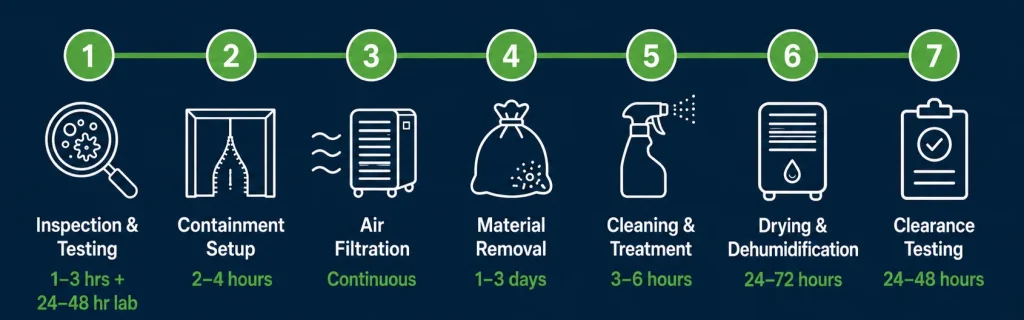
The mold removal process follows a defined sequence, and each stage adds time to your overall mold remediation timeline. Here’s what happens and how long each step realistically takes.
Step 1: Inspection and Mold Testing
(1–3 hours on-site; lab results within 24–48 hours)
A certified inspector uses non-invasive equipment, including mold thermal imaging cameras, laser particle counters, and fiber-optic borescopes, to locate mold, check moisture levels, and assess the extent of contamination without unnecessary demolition.
Samples go to a lab, and results come back within 24–48 hours. Learn more about mold inspection costs here.
Step 2: Containment Setup
(2–4 hours)
Technicians seal off the affected area using heavy-duty plastic sheeting and establish negative air pressure to prevent spores from migrating to clean areas of the home. Any service that skips this step puts the rest of your home at risk.
Step 3: Air Filtration
(Continuous throughout remediation)
HEPA air scrubbers run continuously from the moment containment goes up until the final mold clearance test to capture airborne spores disturbed during removal and to eliminate conditions that would allow new mold growth to take hold.
Step 4: Removal of Mold-Affected Materials
(1–3 days)
This is where most of the time goes. Drywall, insulation, carpeting, and other porous materials that cannot be cleaned are removed. The more contamination, the longer this stage runs.
Professional mold remediation and testing require specialized training and expertise beyond basic cleanup methods. Improper removal without proper containment spreads the problem rather than solving it.
Step 5: Cleaning and Antimicrobial Treatment
(3–6 hours)
After the materials are removed, the remaining salvageable surfaces receive a thorough cleaning, using HEPA vacuums followed by an EPA-registered antimicrobial application. This step treats what stays, not just what leaves.
Step 6: Drying and Dehumidification
(24–72 hours)
One of the most commonly rushed stages. Industrial dehumidifiers and drying equipment must run until moisture readings confirm the space is dry. Cutting this stage short is a significant mistake because residual moisture creates the exact conditions mold needs to return.
Step 7: Post-Remediation Clearance Testing
(Results within 24–48 hours)
A final air quality test confirms the remediation was successful. This step is not optional, and it protects homeowners from returning too soon to a space that still requires attention.
Altogether, you get a total mold remediation timeline of roughly 3–7 days from inspection through clearance testing.
Factors That Make Mold Remediation Take Longer (or Shorter)
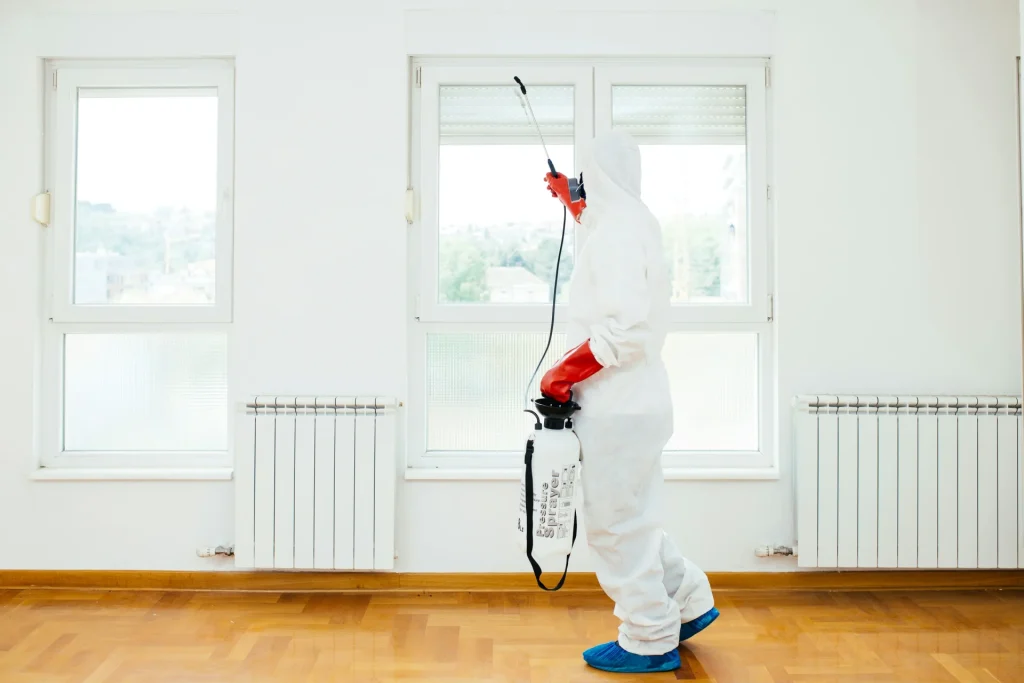
The mold remediation timeline for residential properties varies significantly based on these specific variables. Run through them to estimate how long mold remediation will take for your situation.
- Size of the affected area: A patch of mold in a single bathroom might resolve in one day. Mold spread through wall cavities after a plumbing leak can take several days of removal work alone.
- Type of mold present: Certain mold species require more aggressive containment and removal protocols, which adds time. Your inspection report will identify what you’re dealing with.
- Location of the mold: Mold on an exposed surface is straightforward. Mold behind drywall, under flooring, or inside ceiling cavities requires demolition to access, adding at least 1–2 days.
- Extent of moisture damage: If the water source causing the mold hasn’t been repaired before remediation begins, the job stalls. Remediation cannot succeed against an active moisture problem. Water damage that precedes mold growth dramatically extends the remediation scope.
- HVAC system mold contamination: Mold inside ductwork or air handling equipment is one of the most significant timeline extenders and a particular concern in commercial properties. Treating these systems adds scope, specialized cleaning, and additional testing. Commercial mold remediation extends the timeline further.
- Building materials involved: Porous materials, such as drywall and insulation, must be physically removed. Non-porous surfaces like concrete or metal can often be cleaned and treated in place.
Timeline tier reference:
- 1–2 days: Small, isolated surface mold, no structural materials affected, moisture source resolved
- 3–5 days: Mold behind walls or under flooring, moderate square footage, standard building materials
- 5+ days: HVAC involvement, large square footage, extensive water damage, multiple rooms affected
Safety During and After Remediation: When Can You Return Home?
Many homeowners ask whether it’s safe to be in the house during mold remediation, and the short answer is no. Residents should not stay in the affected area during active work and, in most cases, should vacate the home entirely. Mold remediation takes between 1 and 10 days for most projects, so planning for temporary accommodations up front is worth it.
Disturbing mold releases spores into the air, and even with containment barriers in place, air quality in adjacent spaces can be affected. Anyone with respiratory conditions, allergies, asthma, or young children at home should treat evacuation as mandatory, not optional.
After the work is complete, the question isn’t “is the visible mold gone?”, it’s “has the clearance test come back clean?” The standard guidance, consistent with IICRC protocols, is to wait until post-remediation air quality testing confirms that spore counts have returned to normal before re-entry. That typically means 24 hours after work is finished, but only after a passing clearance test result, not simply after the crew packs up.
This matters more than most people realize. According to the EPA, people in the U.S. spend more than 90% of their time indoors, making post-remediation indoor air quality a genuine health priority. Returning to a space too soon, where clearance hasn’t been confirmed, defeats the purpose of the remediation entirely.
NYC’s climate also affects how quickly spaces dry and how quickly air quality normalizes, which is another reason re-entry should always be tied to test results, not the calendar.

How to Prevent Mold From Coming Back After Remediation
After thousands of completed projects, the most consistent finding is that lasting remediation outcomes depend on what the homeowner does in the weeks that follow. The professionals address the contamination, but consistent follow-through protects that outcome long term.
Here’s the post-remediation action plan:
- Fix the moisture source first. No mold removal timeline holds if the leak, humidity problem, or condensation issue that caused the mold remains unaddressed. This step precedes everything else.
- Keep indoor humidity below 50%: This is a measurable, achievable target. A whole-home dehumidifier helps maintain that threshold.
- Improve ventilation in high-risk rooms: Bathrooms, kitchens, and basements are the most common repeat-mold zones. Exhaust fans, improved airflow, and dehumidifiers reduce the risk in spaces that are particularly vulnerable to the NYC climate.
- Schedule a follow-up inspection 30–90 days post-remediation: This catches any early recurrence before it becomes a full remediation project again.
- Know the early warning signs: A musty smell, condensation forming on walls, or faint discoloration are early indicators that conditions are favorable for mold return. Catching it early keeps the mold removal timeline short and the scope manageable.
A certified mold remediation specialist doesn’t just remove what’s visible; they identify the root cause, apply the right protocols, and leave you with a clear prevention plan to follow.
Schedule Mold Remediation Today
The mold remediation process follows a clear sequence, and understanding the full mold remediation duration helps you plan realistically rather than be surprised mid-project. From inspection through clearance testing, each step serves a purpose, and skipping any one of them increases the risk of mold returning.
With 20+ years of experience, IICRC and EPA credentials, and 8,000+ completed projects across NYC Metro and Northern NJ, Prime Air Mold Services brings certified expertise and state-of-the-art non-invasive equipment to every job for verified results.
Ready to rid your home of mold?